
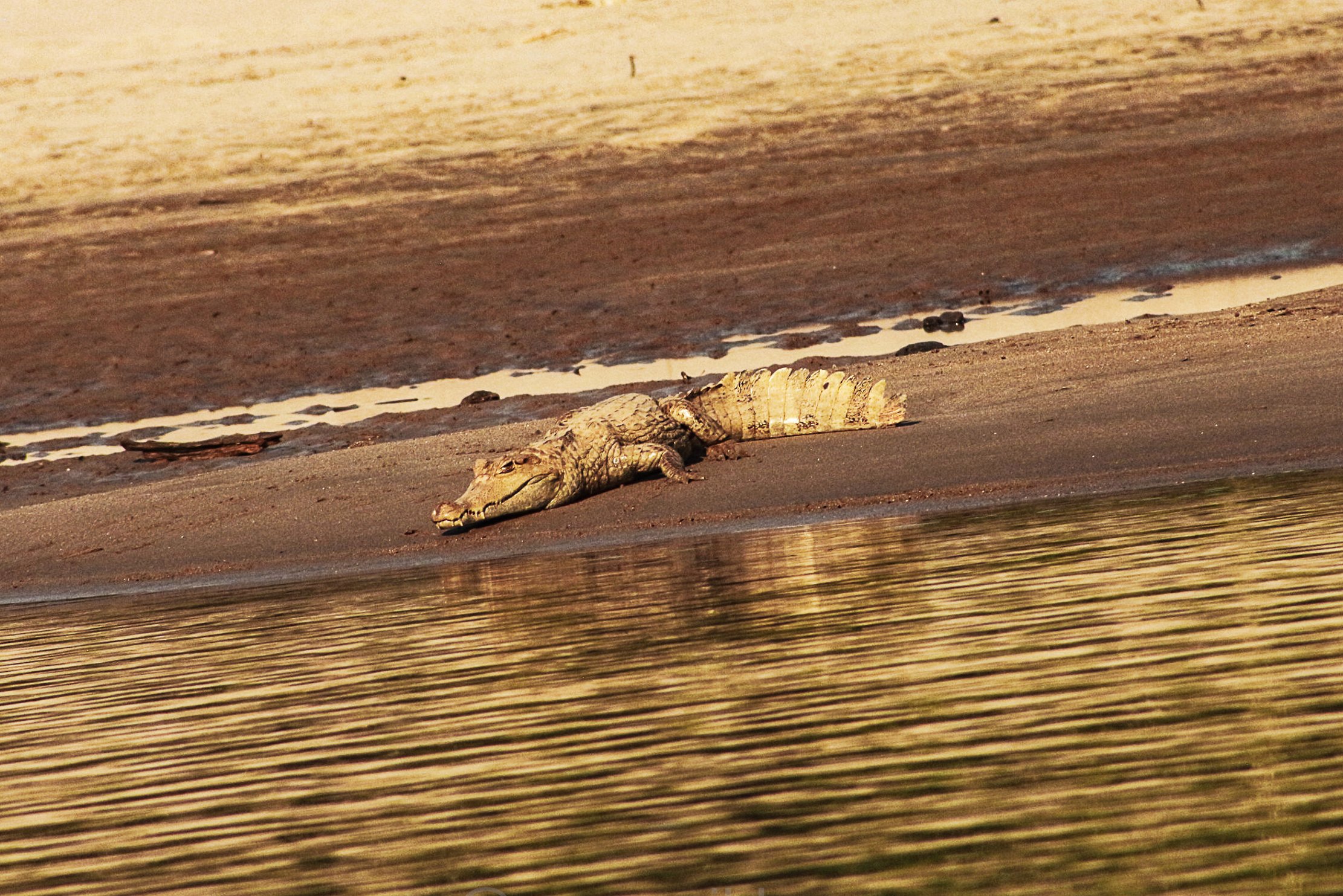
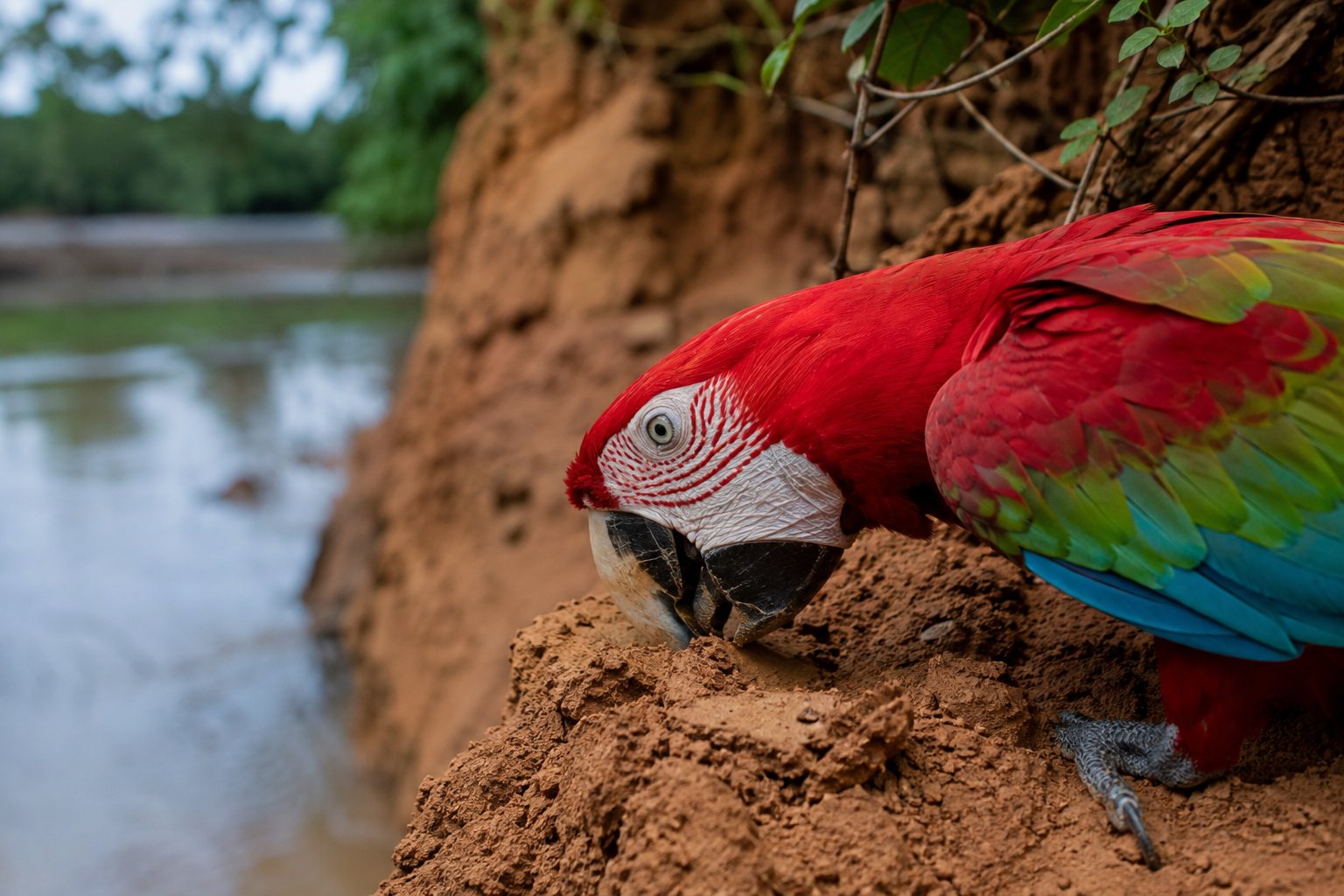
Imagine waking up before dawn, navigating a quiet Amazon river in a wooden canoe, and stepping into a hidden wooden blind. As the morning mist clears, the jungle erupts into a deafening, colorful explosion of wings. Hundreds of Scarlet Macaws, Blue-and-Yellow Macaws, and parrots descend upon a riverbank to eat clay.
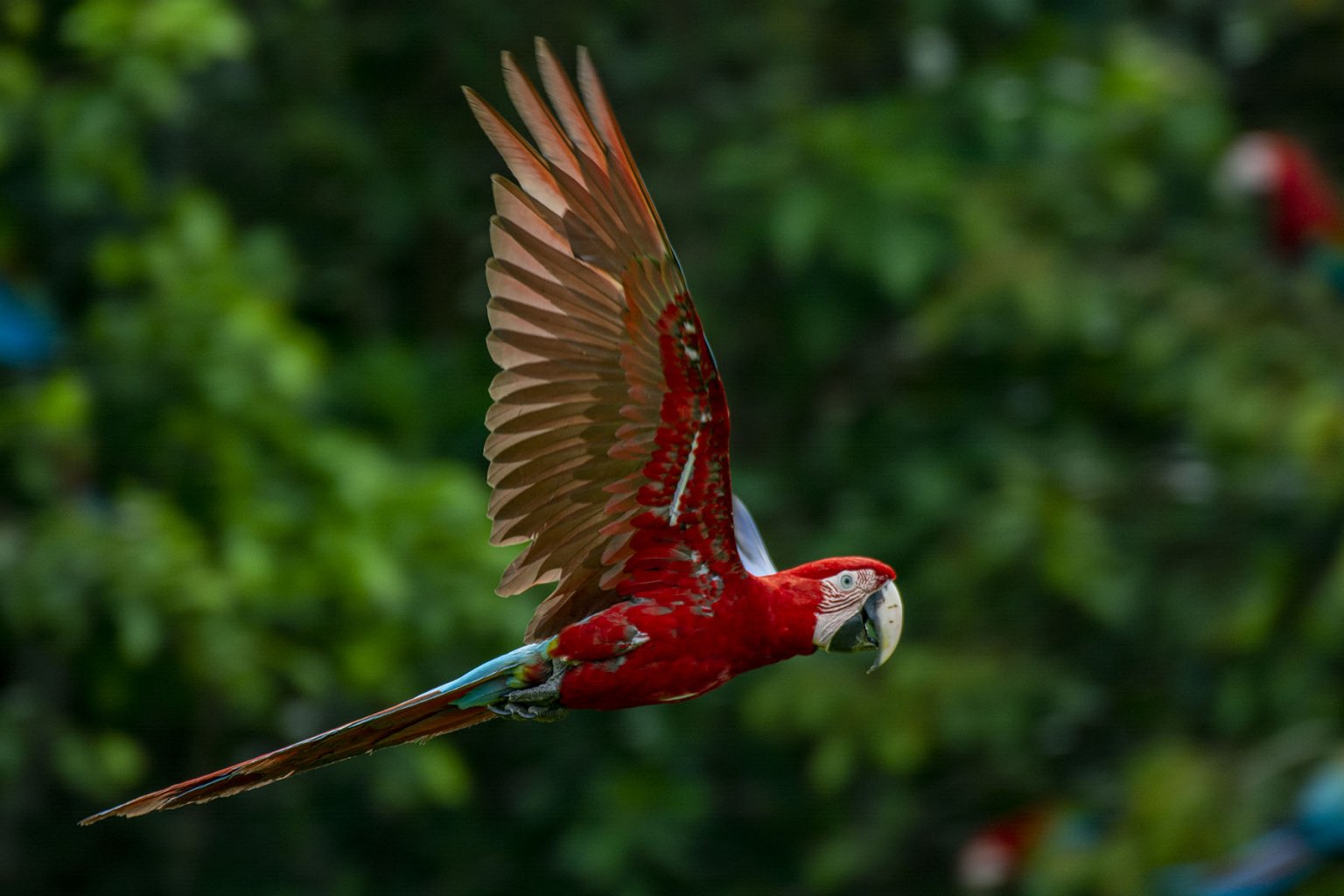
This is the Manu Macaw Clay Lick experience, widely considered one of the greatest wildlife spectacles on Earth.
But what exactly happens at a clay lick, where are the best ones in Manu National Park, and how can you capture this chaotic beauty through your lens? In this complete guide, we will break down everything you need to know to experience and photograph the legendary Amazon clay licks.
What is a Macaw Clay Lick and Why Do Parrots Visit?
A "clay lick" (known locally as a collpa) is a specific section of a riverbank where the soil is rich in sodium and other minerals. Macaws and parrots fly in from deep within the rainforest to eat this clay.
Why do they do it? Scientists believe the clay serves two main purposes:
- Sodium Supplement: The Amazonian diet (fruits, seeds, nuts) is very low in sodium. The clay provides a crucial mineral boost.
- Toxin Neutralization: Many unripe seeds and fruits eaten by macaws contain toxic alkaloids. The clay binds to these toxins in their digestive system, neutralizing them so the birds can safely digest their food.
Regardless of the scientific reason, the result for us is a breathtaking, highly concentrated gathering of hundreds of birds in a single location.
The Best Macaw Clay Licks in Manu National Park
While there are several clay licks in the Amazon, Manu National Park is home to the most spectacular and reliable ones. Here are the top two you must know:
1. Blanquillo Macaw Clay Lick
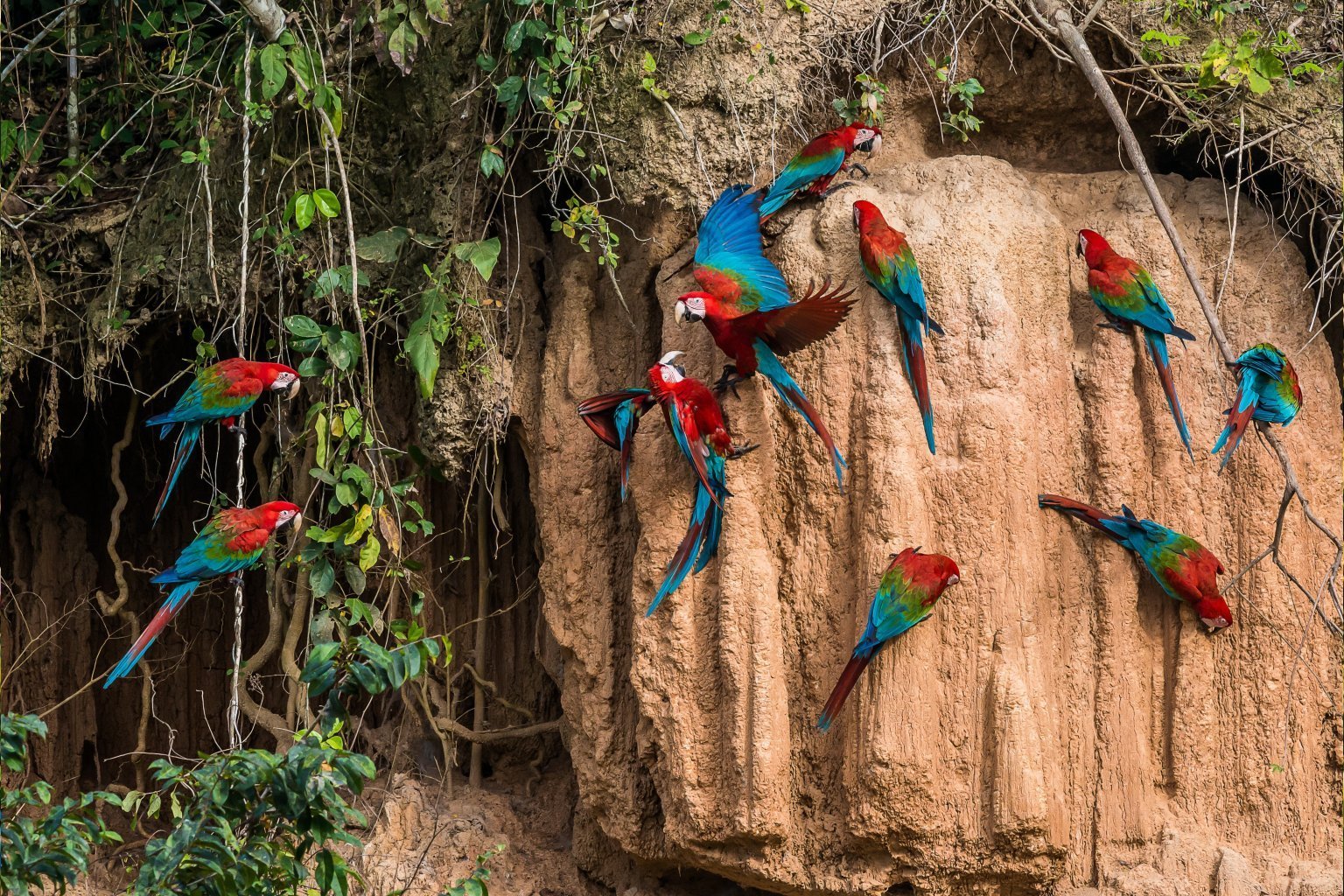
Located in the Manu Biosphere Reserve, Blanquillo is the most famous and accessible clay lick for standard tours. It features a massive, exposed riverbank and a towering canopy observation tower nearby.
- The Experience: You watch from a wooden blind just meters from the riverbank. The tower offers a unique aerial perspective of the flock arriving.
- Best For: First-time visitors, photographers wanting wide-angle shots of the massive flock, and those combining the lick with oxbow lake giant otter spotting.
- Recommended Tour: 8-day Blanquillo Macaw Clay Lick Tour
2. Manu Wildlife Center (MWC) Clay Lick
Considered by many experts to be the absolute best clay lick in the Amazon, the MWC lick is located deeper in the Reserved Zone. The lodge has built a specialized, comfortable blind right at the edge of the lick.
- The Experience: The birds here are incredibly habituated to the blind, often landing just a few feet away from where you sit. The action is fast, close, and incredibly detailed.
- Best For: Serious wildlife photographers, birders, and those seeking the most intimate, premium clay lick experience.
- Recommended Tour: 5-Day Manu Photography Tour
What to Expect on a Clay Lick Tour
Visiting a clay lick is not a casual stroll; it is a dedicated wildlife expedition. Here is what a typical morning looks like:
- Early Wake-Up: You will wake up around 3:30 AM or 4:00 AM. The birds arrive at dawn, and you must be in the blind before the first light.
- The Journey: A quiet boat ride or a short hike through the dark jungle (guided by your expert with flashlights) to reach the blind.
- The Wait: You sit in silence in the wooden blind. The jungle wakes up around you with howler monkeys and insects.
- The Arrival: As the sun rises, a few scout birds arrive. If the coast is clear, the main flock descends in a chaotic, loud, and colorful frenzy that lasts for 1 to 2 hours.
- The Departure: Once the birds have had their fill of clay, they fly off into the canopy, and you return to the lodge for a well-earned breakfast.
How to Photograph Macaws at the Clay Lick
Photographing a clay lick is both incredibly rewarding and highly challenging. The light changes rapidly, the birds move unpredictably, and the background can be busy. Here are our expert tips to get the perfect shot.

1. Essential Camera Gear
- Telephoto Lens: A 100-400mm or 70-200mm lens is essential. At Blanquillo, you are a bit further away, so 400mm is ideal. At MWC, a 70-200mm works beautifully.
- Tripod or Monopod: You will be in a blind for 2 hours. A tripod is crucial for sharp images, especially in the lower light of dawn. (Check with your tour operator if tripods are allowed in the specific blind).
- Fast Memory Cards & Extra Batteries: You will be shooting in burst mode. Bring plenty of storage and power.
- Rain Protection: A simple rain cover for your camera is mandatory. Amazon mornings can bring sudden drizzles.
2. Camera Settings for Clay Licks
- Shutter Speed: Keep it high! Birds move fast. Aim for at least 1/1000s to 1/2000s to freeze the wings in flight. If you want to show motion blur in the wings, drop it to 1/250s and pan with the bird.
- Aperture: Use a wide aperture (f/2.8 to f/5.6) to isolate the birds from the busy jungle background and let in maximum morning light.
- ISO: Don't be afraid to push your ISO (800-3200). Modern cameras handle high ISO very well, and a sharp, slightly noisy photo is better than a blurry, clean one.
- Autofocus Mode: Use Continuous AF (AI-Servo for Canon, AF-C for Nikon/Sony) and a dynamic or zone AF point to track the flying macaws.
3. Composition and Timing Tips
- Shoot the Interactions: Don't just shoot the birds eating. Look for birds fighting over a spot, preening each other, or taking off. The action is in the interactions.
- Include the Environment: Use a wider lens occasionally to capture the sheer scale of the massive flock covering the clay bank.
- Watch the Light: The best light is usually the first 30-45 minutes after sunrise. As the sun gets higher, the light becomes harsh and flat.
Best Time of Year to Visit the Clay Licks
While macaws visit clay licks year-round, the dry season (May to October) is generally considered the best time. During these months, the river levels are lower, exposing more of the clay bank, and the weather is more predictable, meaning fewer rainouts. However, the wet season (November to April) still offers spectacular sightings, often with lush, green backgrounds and fewer tourists.
Frequently Asked Questions (FAQ)
Do I need a special permit to visit the Macaw Clay Lick?
Yes, if the clay lick is located within the Manu Reserved Zone (like Blanquillo and Manu Wildlife Center). Independent travel is not allowed. You must book through an authorized operator like Manu Wild, who will secure the necessary government permits for you.
Is it guaranteed that I will see macaws at the clay lick?
While nature is never 100% guaranteed, the major clay licks in Manu (especially Blanquillo and MWC) have a very high success rate, often above 90%. The birds are highly habituated to these specific locations and visit them daily, weather permitting.
Can I use a drone to photograph the clay lick?
Absolutely not. Drones are strictly prohibited in Manu National Park and all Peruvian protected natural areas. They cause severe stress to wildlife and can disrupt the natural behavior of the birds. Leave your drone at home.
How close do the birds get to the blind?
It depends on the location. At Blanquillo, the birds are usually 10 to 30 meters away, which is great for wide shots of the flock. At the Manu Wildlife Center blind, the birds are incredibly close, often landing just 2 to 5 meters away, making it a paradise for detailed, close-up photography.
Ready to Witness the Clay Lick Spectacle?
Seeing hundreds of macaws descend upon the Amazon riverbank is an experience that stays with you forever. It is a vivid reminder of the raw, untamed beauty of the Peruvian rainforest.
Whether you are a professional photographer chasing the perfect shot or a nature lover seeking the ultimate wildlife encounter, a Manu clay lick tour is a must-do.
Explore Our Clay Lick & Wildlife Tours →
Have questions about the best clay lick for your photography goals? Contact our expert team → and we will help you plan the perfect Amazon expedition.