

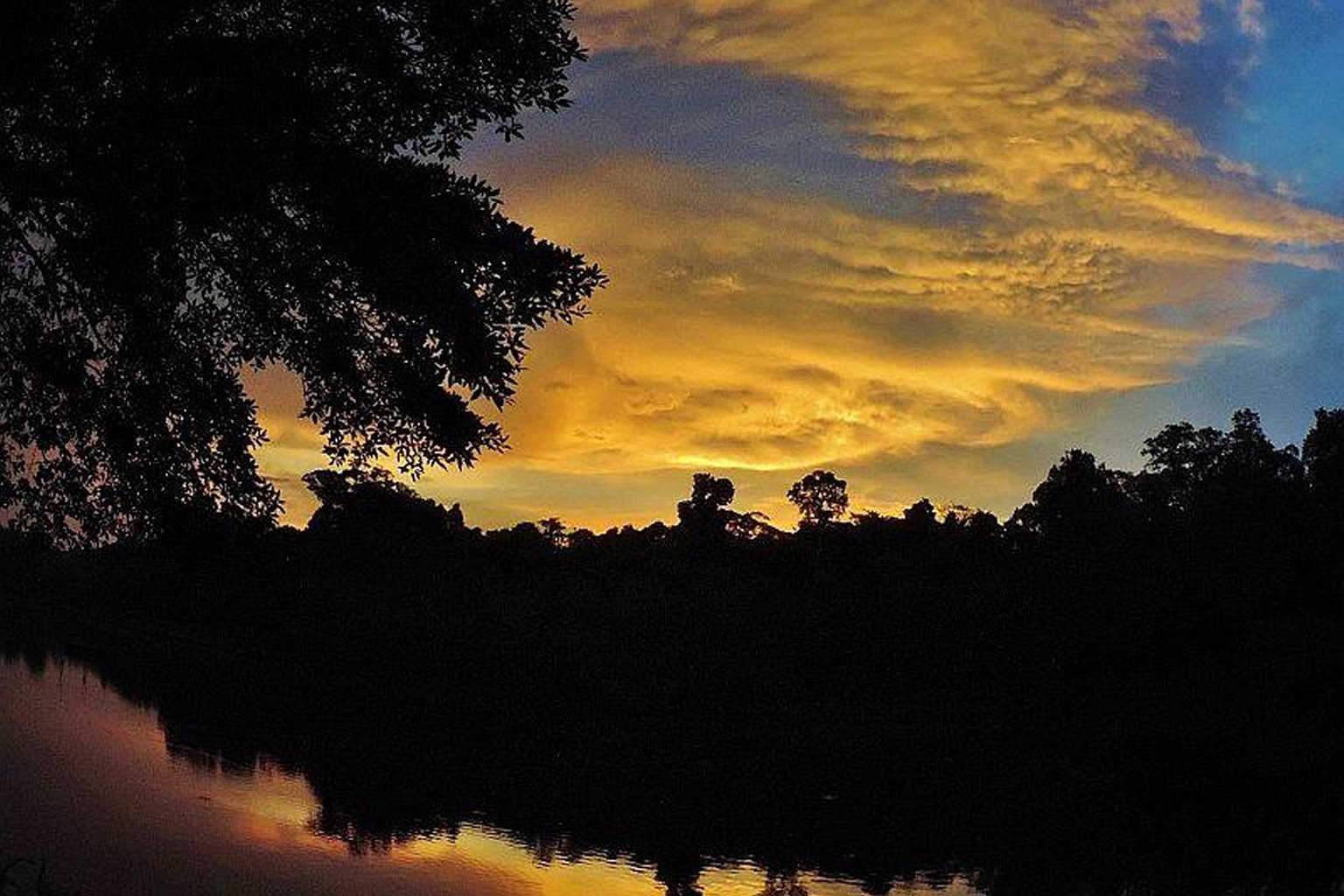
When the sun sets in the Amazon rainforest, the jungle doesn't go to sleep—it simply changes shifts. The daytime chorus of birds and monkeys fades, replaced by the rhythmic croaking of frogs, the hum of insects, and the rustling of nocturnal hunters.
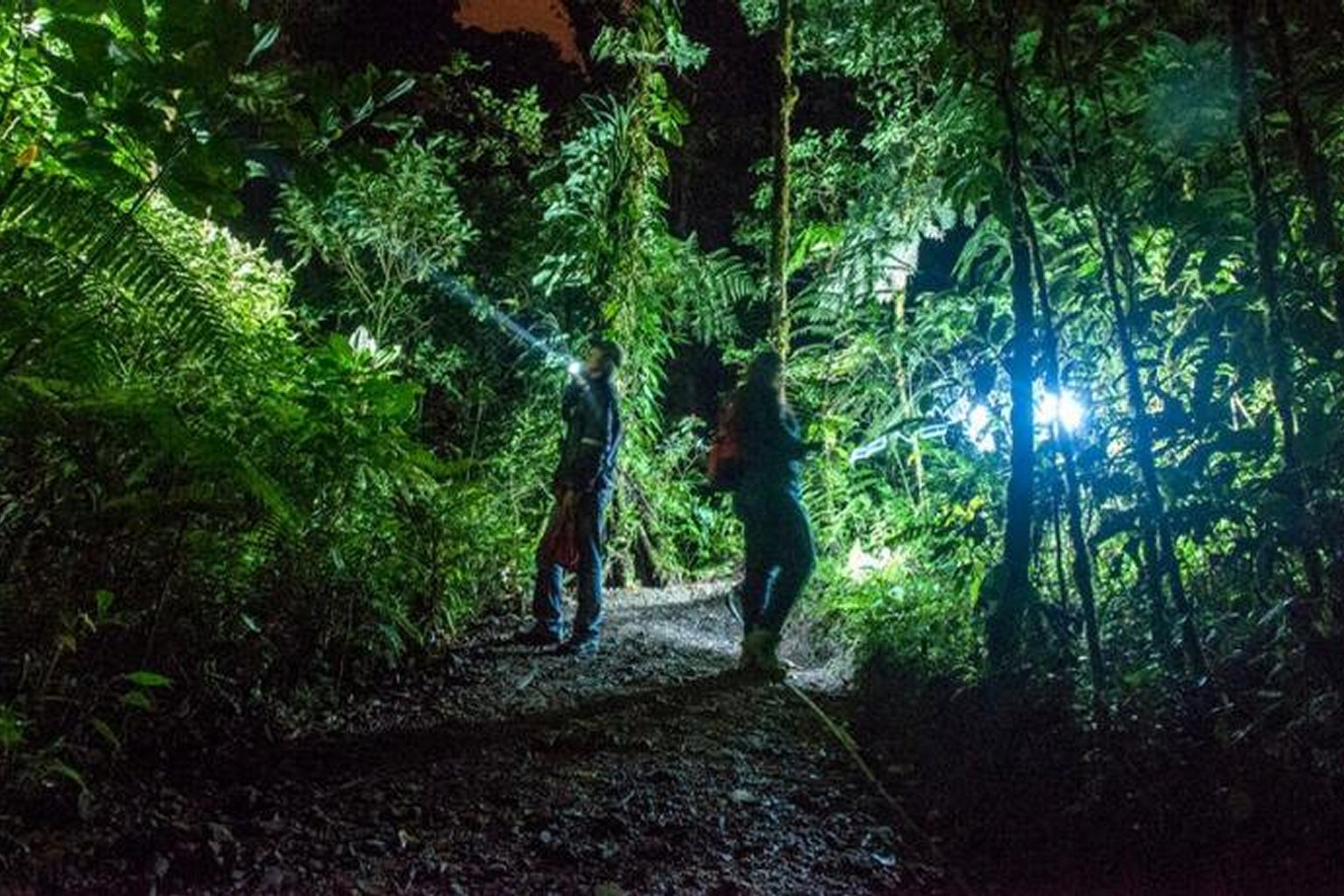
For many travelers, a night walk in Manu National Park is the most thrilling and memorable part of their Amazon expedition. It is a completely different world, where the rules of the jungle are rewritten in the dark. In this guide, we will tell you exactly what to expect, the incredible creatures you might encounter, and how to stay safe while exploring the Amazon after dark.
What is a Jungle Night Walk?
A night walk is a guided, 1 to 2-hour excursion along the trails surrounding your jungle lodge. Because the forest floor is relatively safe and accessible near the lodges, it is the perfect opportunity to observe the specialized fauna that only comes out at night. You will walk slowly, using red-light flashlights to minimize disturbance to the animals, while your expert guide scans the leaves, branches, and ground for hidden treasures.
Top Nocturnal Species You Will Discover
The Amazon is home to thousands of nocturnal species. While nature is never 100% predictable, here are the most common and fascinating creatures our guides regularly spot on night walks in Manu.
1. The Masters of Camouflage: Potoos and Nightjars
If you see a piece of wood that looks strangely like a bird, it probably is! The Common Potoo and various Nightjar species are the undisputed champions of disguise. They sit perfectly still on fence posts or branches, their mottled grey and brown feathers blending seamlessly with the bark. They only reveal themselves when they open their massive, yellow eyes and cavernous mouths to catch insects.
2. The Amphibian Jewels: Tree Frogs
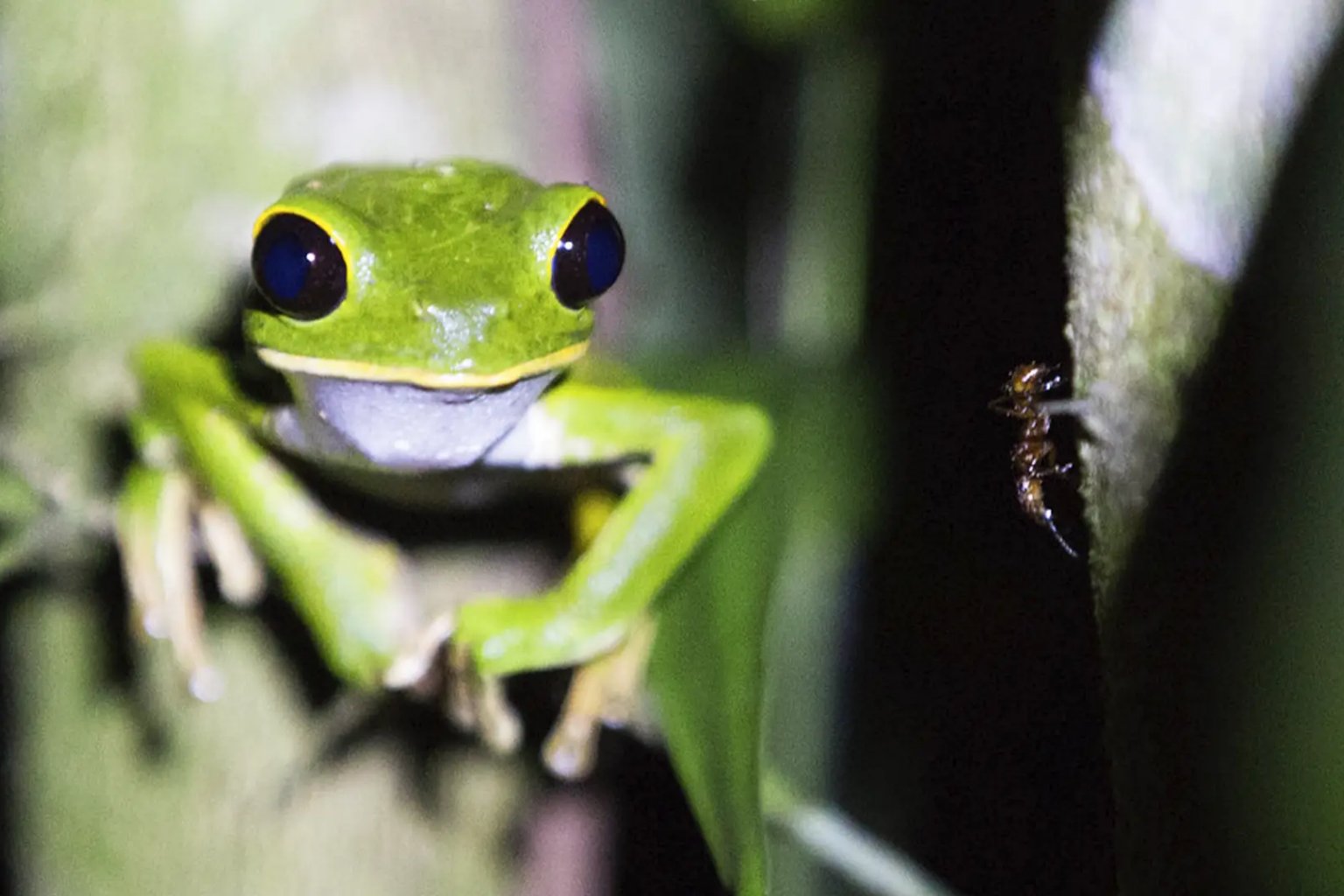
The night is when the frogs come alive. You will likely encounter the iconic Red-eyed Tree Frog, with its vibrant green body and striking red eyes. Look closely at the leaves near streams to find the translucent Glass Frog, where you can actually see its internal organs through its skin. Keep an ear out for the deep, resonant call of the Giant Monkey Frog.
3. The Invertebrate Giants: Tarantulas and Insects
For those who love (or are just curious about) bugs, the jungle floor is a goldmine. The highlight is often the Goliath Birdeater Tarantula, the largest spider in the world by mass. Despite its intimidating size and hairy legs, it is generally docile. You will also see massive Leafcutter Ants marching in organized highways, and perfectly camouflaged Stick Insects.
4. The Night Hunters: Caimans and Snakes
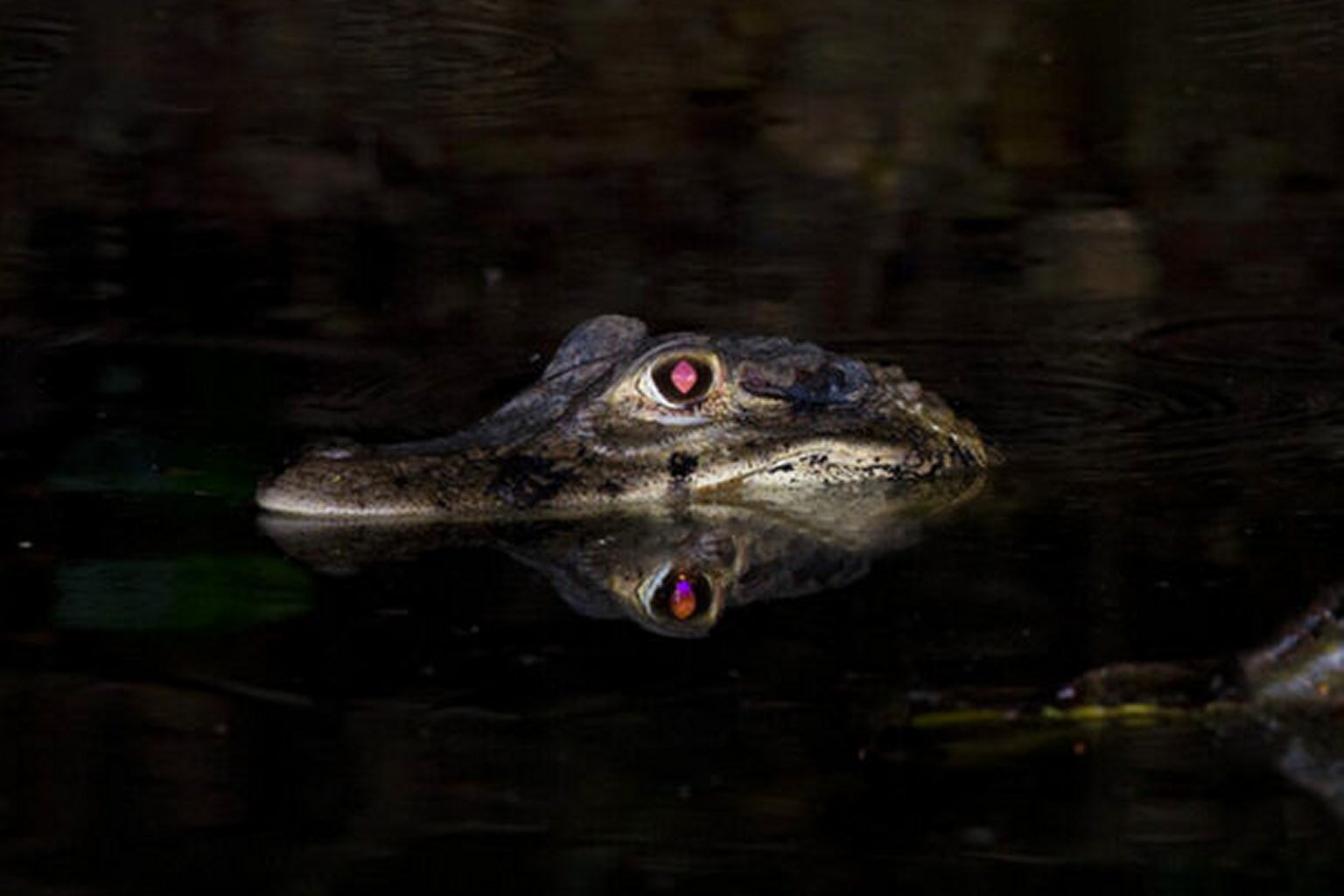
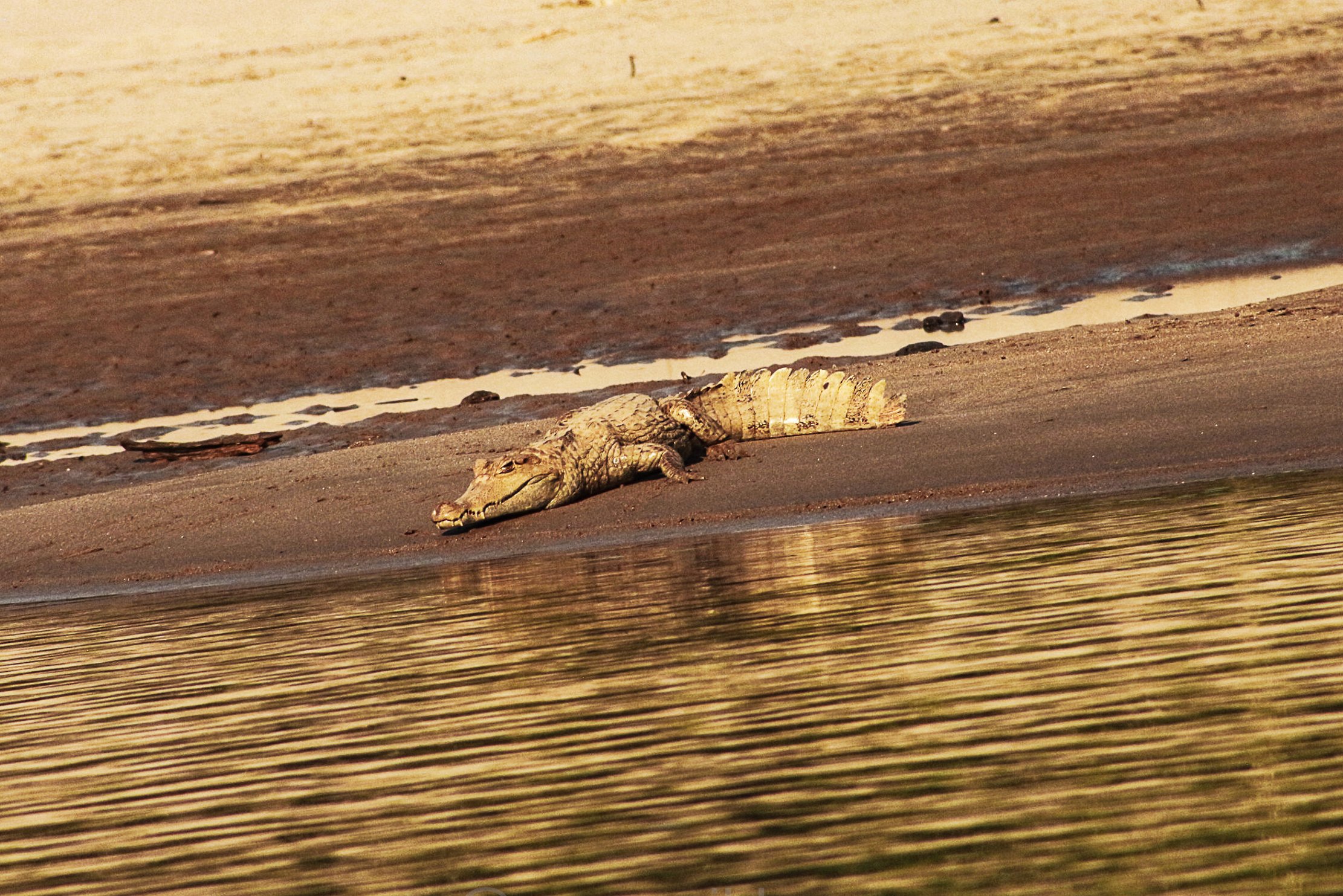
Shining a light across a dark pond or river will often reveal the glowing red eyes of Spectacled Caimans. As for reptiles, you might spot a sleeping Boa Constrictor coiled in a low branch, or the beautifully patterned, yet highly venomous, Coral Snake. (Don't worry, our guides know exactly how to keep a safe distance!).
5. The Nocturnal Mammals: Kinkajous and Night Monkeys
Mammals are harder to spot at night, but with a bit of luck and a good guide, you might see a Kinkajou (a relative of the raccoon) or an Olingo foraging for fruit in the canopy. And, of course, the elusive Night Monkey (Owl Monkey), the only nocturnal primate in the Americas, with its enormous amber eyes.
Safety and Ethics: The Golden Rules of Night Walks
Exploring the jungle at night is incredibly safe when done with a professional, but it requires respect and caution. Here are the rules we strictly enforce on all our tours:
- Never Touch Anything: This is the most important rule. Many nocturnal insects, frogs, and caterpillars have toxic secretions. Let the guide handle the wildlife if a closer look is needed.
- Stay on the Trail: It is very easy to lose your footing or step on a hidden creature in the dark. Always follow the beam of your guide's flashlight.
- Use Red Light Only: White light blinds and stresses nocturnal animals. We use red-light flashlights, which allow us to see the animals without disrupting their natural behavior.
- Wear Closed-Toe Shoes: Always wear your hiking boots or sturdy sneakers to protect your feet from thorns, ants, and scorpions.
What to Wear and Bring on a Night Walk
- Clothing: Long pants and a long-sleeved shirt (light colors make it easier for the guide to spot you and check for ticks).
- Insect Repellent: Mosquitoes and other biting insects are highly active at dusk and dawn.
- Camera: If you want to take photos, a camera with a good external flash is necessary. However, be mindful of the guide's instructions regarding flash usage, especially near the eyes of mammals and birds.
- An Open Mind: Leave your fears at the lodge! The jungle at night is more curious about you than you are about it.
Frequently Asked Questions (FAQ)
Is the night walk in the Amazon safe?
Yes, absolutely. Night walks are conducted on well-maintained trails very close to the safety of the lodge. As long as you follow your guide's instructions, stay on the path, and do not touch the wildlife, the risk of injury or dangerous encounters is virtually zero.
Will I see a jaguar or a large predator on the night walk?
No. Night walks are designed to observe small to medium-sized nocturnal fauna (frogs, insects, small mammals, reptiles). Large predators like jaguars or pumas are incredibly elusive and roam vast territories; they are not found on the short trails near the lodges.
What if I am terrified of spiders and snakes?
That is completely normal! Let your guide know your fears beforehand. They will be extra careful to point out these creatures from a safe distance, or even skip them entirely if it makes you uncomfortable. You can also choose to walk close to the guide in the center of the trail.
Can children participate in the night walk?
Yes! Children usually love night walks because it feels like a real adventure. We recommend it for children aged 6 and older. They must be able to walk quietly and follow instructions for their own safety.
Experience the Magic of the Amazon After Dark
A night walk in Manu National Park is a sensory adventure that will change the way you look at the rainforest. It reveals the hidden, intricate, and often bizarre life that thrives in the shadows, proving that the Amazon is truly alive 24 hours a day.
Ready to step into the nocturnal world of the jungle? Our expert local guides are waiting to show you the secrets of the dark forest.
Explore Our 6-Day Manu Reserved Zone Tour (Includes Night Walks) →
Have questions about our night excursions? Contact our team → and let's plan your ultimate Amazon adventure.