


Peru is home to more primate species than any other country in the Americas, and the crown jewel of this incredible diversity is Manu National Park. With 13 distinct species of monkeys inhabiting its rainforests, Manu is a true primate paradise.
For nature lovers, identifying these species is one of the most rewarding parts of an Amazon expedition. From the deafening roars of the Howler monkeys to the acrobatic leaps of the Spider monkeys, each species has a unique role in the jungle ecosystem.
In this complete identification guide, we will introduce you to the 13 monkey species of Manu, how to recognize them, and the best ways to spot them during your Manu National Park tour.
The Giants of the Canopy: Howler and Spider Monkeys
These are the largest and most recognizable primates in Manu, often heard long before they are seen.
1. Black-and-Gold Howler Monkey
Identification: Large, robust bodies covered in thick black and golden-yellow fur. Males have a distinctive enlarged hyoid bone in their throat.
Behavior: Famous for their terrifying, guttural roars that can be heard up to 3 miles away. They are relatively slow-moving and spend most of their time eating leaves and resting in the high canopy.
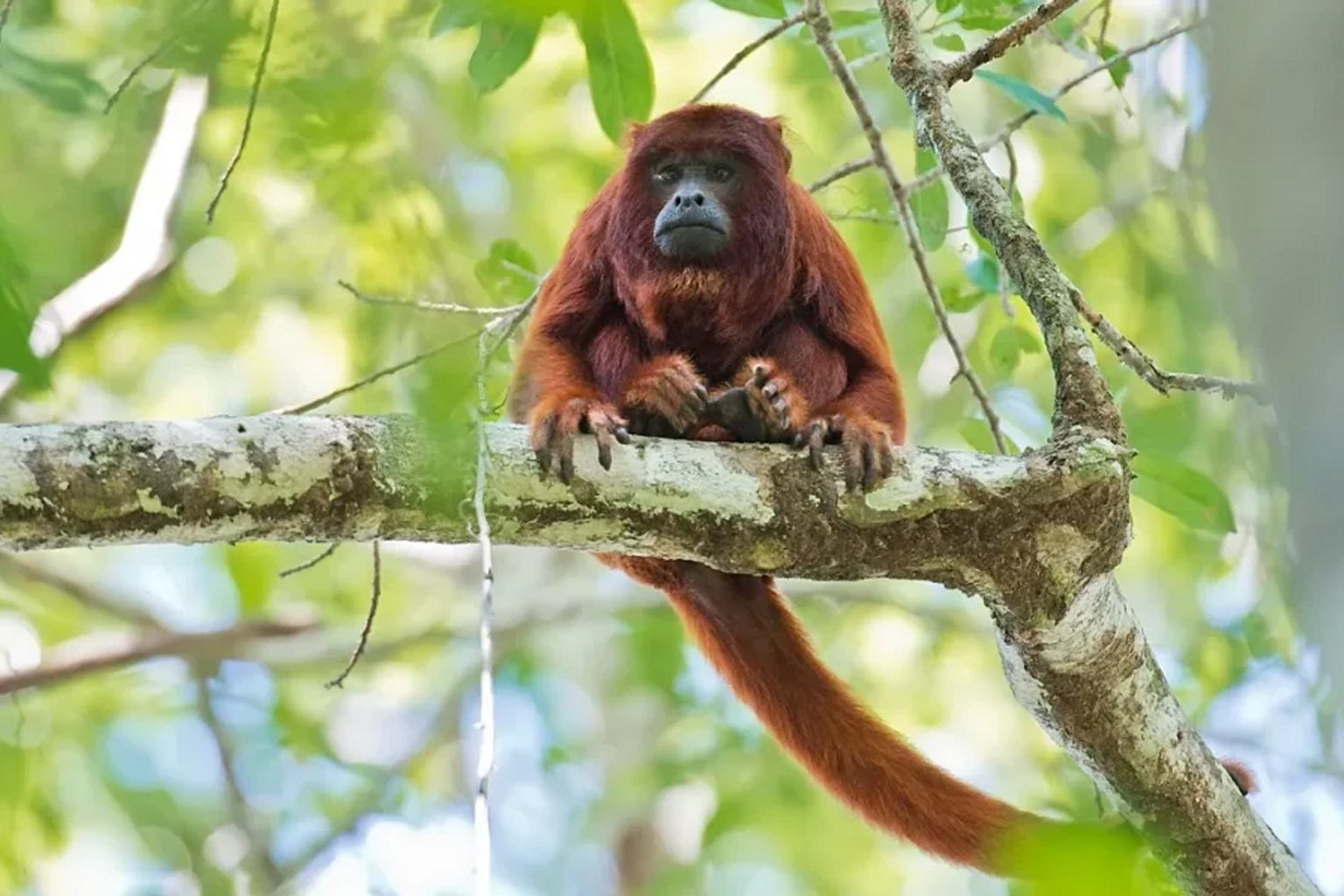
2. Red Howler Monkey
Identification: Covered in vibrant, rusty-red fur. Slightly smaller than the Black-and-Gold Howler.
Behavior: Also known for loud vocalizations, though slightly higher-pitched. They often travel in large troops and are highly territorial.
3. Peruvian Spider Monkey
Identification: Long, lanky limbs and a very long, prehensile tail that acts as a fifth limb. They have black fur and a hairless, expressive face.
Behavior: The true acrobats of the canopy. They swing rapidly from branch to branch (brachiation) and are highly intelligent. They are often seen foraging for fruits in the treetops.
The Intelligent Foragers: Capuchins and Squirrels
These highly active, curious monkeys are often seen closer to the ground or in the mid-canopy, making them favorites for tourists.
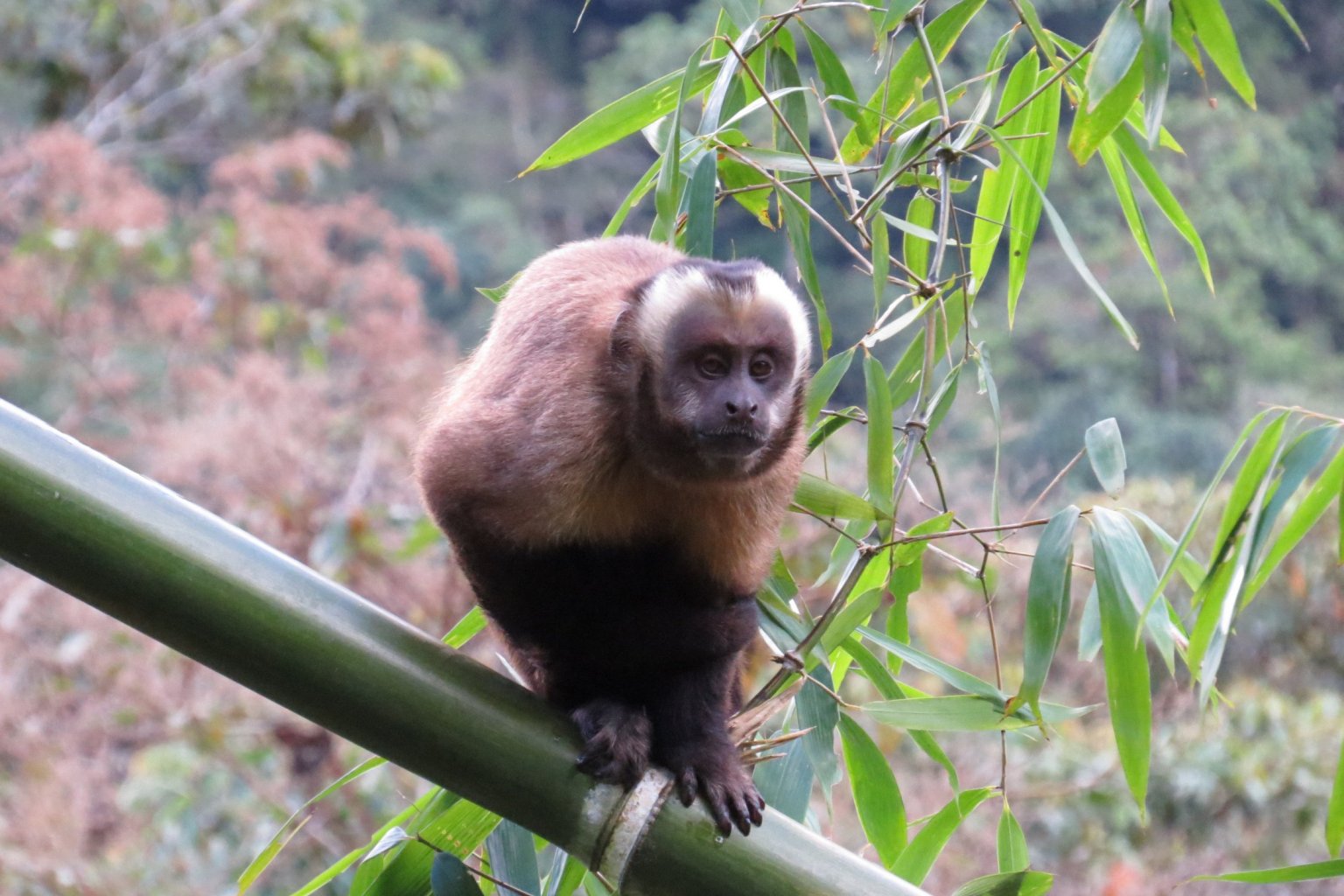
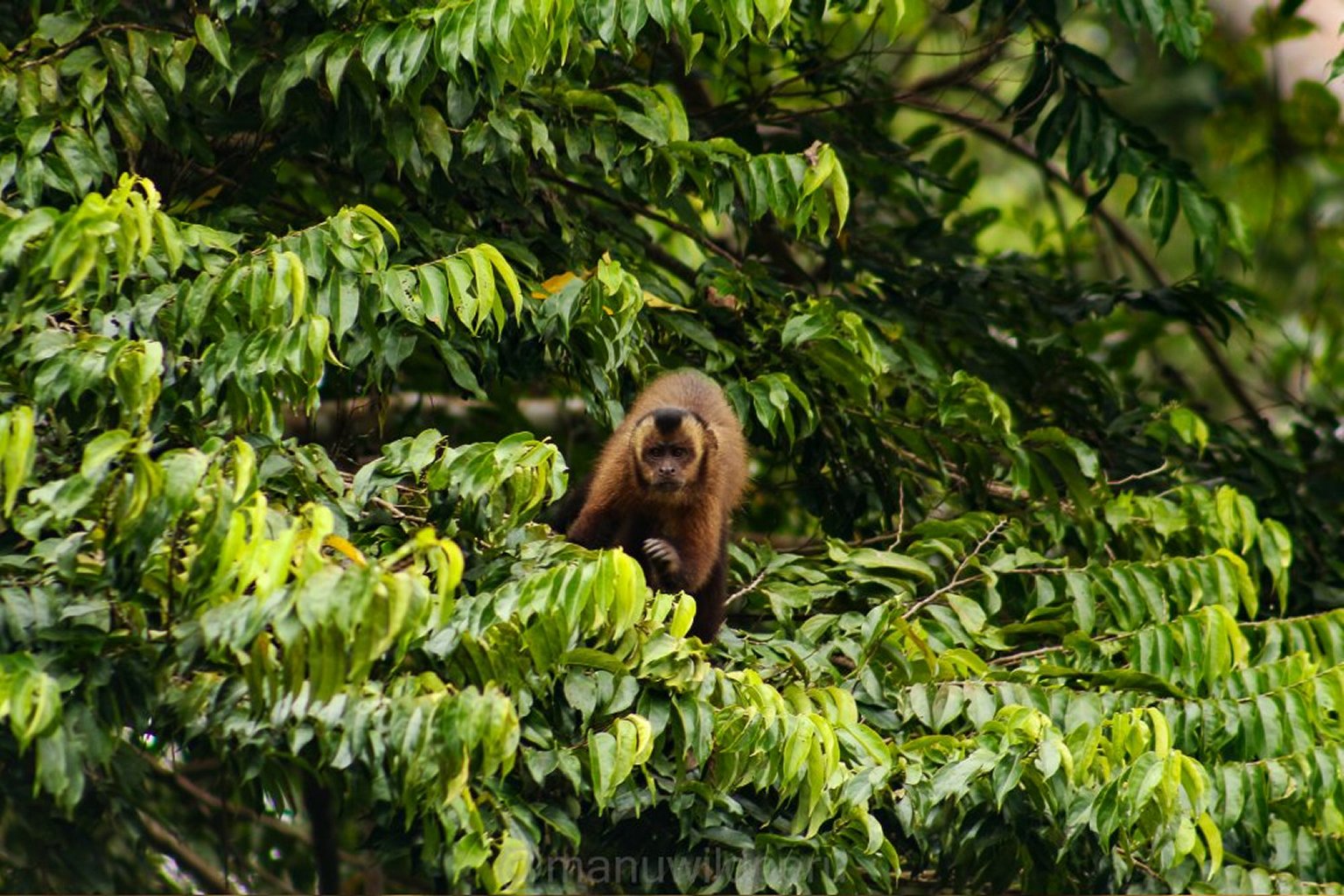
4. Wedge-capped Capuchin
Identification: Medium-sized with a distinctive black "cap" on their head and yellowish-white shoulders and chest.
Behavior: Highly intelligent and opportunistic. They are famous for using tools, such as smashing nuts with stones. They travel in large, noisy troops and are often the first monkeys you'll spot on a jungle trail.
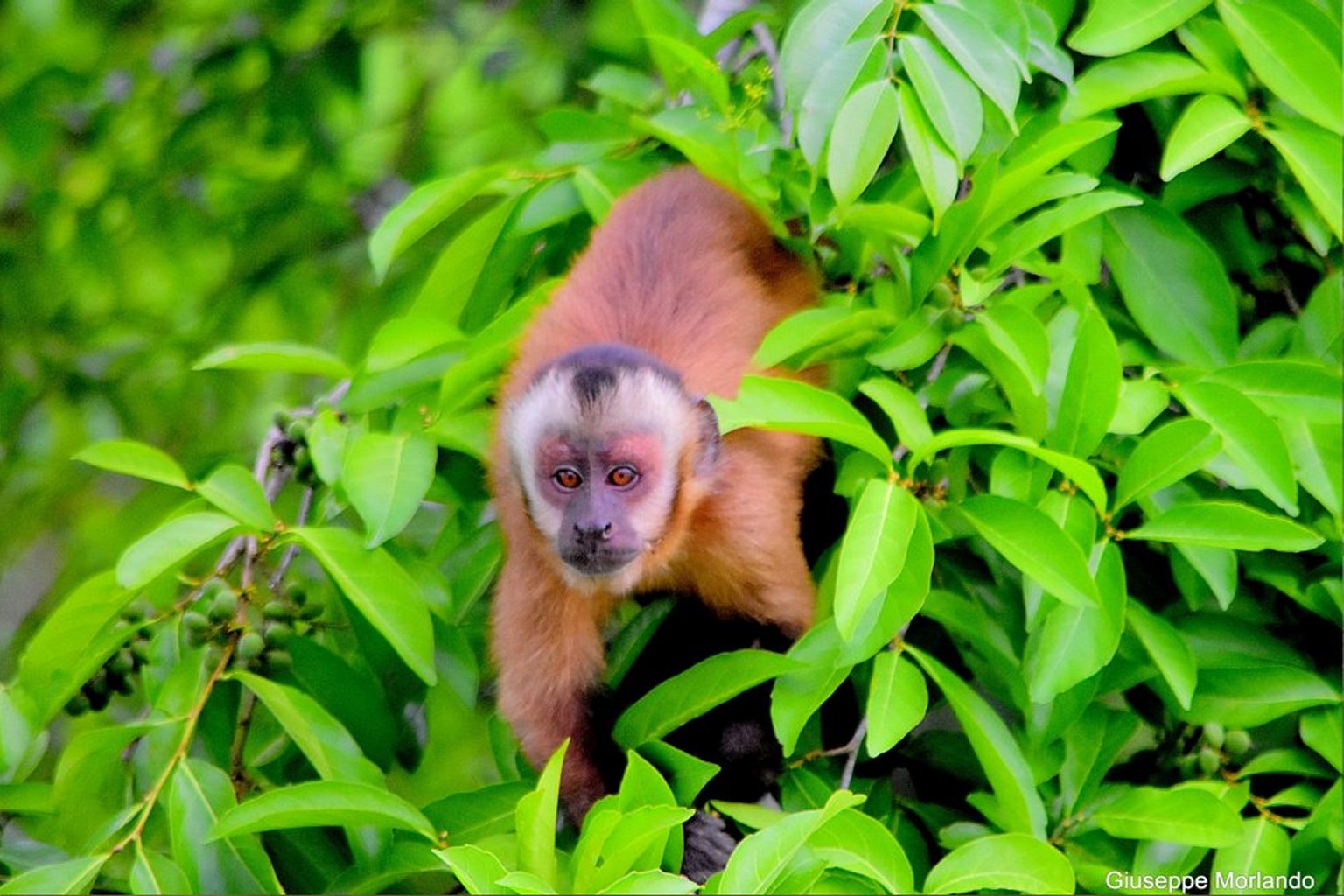
5. White-fronted Capuchin
Identification: Similar in size to the Wedge-capped, but with a white or pale-yellow face and forehead, contrasting with their dark brown body.
Behavior: Very social and vocal. They often forage on the forest floor and are known to raid fruiting trees aggressively.
6. Common Squirrel Monkey
Identification: Small, with a striking yellow-orange face, white muzzle, and a dark cap on their head. Their bodies are olive-green with yellow limbs.
Behavior: They travel in massive, chaotic troops of up to 50 individuals. They are incredibly fast, constantly chattering, and love to eat insects and small fruits in the mid-canopy.
The Tiny Marvels: Tamarins and Marmosets
Don't let their size fool you; these small primates are some of the most beautiful and fascinating creatures in the Amazon.
7. Emperor Tamarin
Identification: Small, with a grey body and a spectacular, long, white mustache that droops down past their shoulders. They also have a long, non-prehensile tail.
Behavior: They move quickly through the lower canopy and are often seen in mixed-species flocks with Saddle-back Tamarins. They are highly cooperative parents, with males carrying the twins.
8. Goeldi’s Marmoset
Identification: Small and entirely black, with a distinctive "mohawk" or mane of long hair on the back of their head.
Behavior: Unlike most monkeys, Goeldi's spend a lot of time foraging in the dense, dark understory (close to the forest floor) for fungi and insects. They are shy and hard to spot.
9. Pygmy Marmoset
Identification: The smallest monkey in the world, weighing less than a smartphone (around 100 grams). They have mottled brown and yellow fur.
Behavior: They live almost exclusively on tree trunks and large branches, using their specialized teeth to gouge holes in the bark to eat tree gum and sap.
The Nocturnal and Shy Wonders
Not all monkeys in Manu are active during the day. These species require a keen eye and a good guide to spot.
10. Night Monkey (Owl Monkey)
Identification: The only nocturnal monkey in the Americas. They have enormous, amber-colored eyes adapted for night vision, and a greyish-brown coat.
Behavior: They sleep in tree hollows during the day and come out at night to forage for fruits and insects. Spotting them requires a good flashlight and a quiet night walk.
11. Red-bellied Titi Monkey
Identification: Small to medium-sized, with a dark grey or black body and a striking reddish-orange belly and tail.
Behavior: They are famous for their strong pair bonds. Mated pairs are often seen sitting close together, intertwining their tails. They are most active at dawn and dusk.
12. Brown Woolly Monkey
Identification: Large, heavy-bodied monkeys with thick, woolly brown or grey fur and a very long, prehensile tail.
Behavior: They are slow-moving canopy dwellers that eat mostly fruit. They are highly sensitive to hunting and are a great indicator of a healthy, protected forest like Manu.
13. Monk Saki
Identification: Males are entirely black with a striking white face and a fluffy "hood" of fur. Females are brown with white streaks on their face.
Behavior: They are shy, arboreal, and prefer the high canopy. They are excellent jumpers and move in small family groups.
Expert Tips for Spotting Monkeys in Manu
Finding monkeys in the dense Amazon rainforest can be challenging, but our expert guides use specific techniques to maximize your sightings:
- Listen First: Monkeys are incredibly vocal. The roar of a Howler, the bark of a Capuchin, or the chattering of a Squirrel monkey will give away their location long before you see them.
- Look for Movement in the Canopy: Guides are trained to spot the subtle shaking of branches or the flash of a tail high up in the trees.
- Visit the Clay Licks and Oxbow Lakes: Many species, especially Capuchins and Squirrel monkeys, come down to the riverbanks to drink water or eat clay in the early morning.
- Go on a Night Walk: To see the elusive Night Monkey and other nocturnal primates, a guided night walk with a red-light flashlight is mandatory.
The Role of Eco-Tourism in Primate Conservation
Many of these 13 species are threatened by habitat loss and illegal hunting in other parts of the Amazon. However, in the protected zones of Manu National Park, their populations are thriving.
By choosing a responsible, eco-friendly tour operator like Manu Wild, your visit directly funds the protection of these habitats. Sustainable tourism proves to local communities that live monkeys are far more valuable than the bushmeat trade, ensuring these incredible species survive for future generations.
Frequently Asked Questions (FAQ)
Which monkey species is the easiest to see in Manu?
The Wedge-capped Capuchin and the Common Squirrel Monkey are the most frequently spotted. They are highly active, travel in large groups, and often forage in the mid-canopy or near the forest floor, making them easy to observe during daytime hikes.
Are the monkeys in Manu dangerous to tourists?
No. Wild monkeys in Manu are naturally wary of humans and will keep their distance. However, it is strictly forbidden to feed them. Feeding wildlife alters their natural foraging behavior and can make them aggressive or dependent on humans.
Can I see all 13 monkey species on a single tour?
Seeing all 13 species on a single trip is incredibly rare and would require a very long, specialized expedition. However, on a standard 5 to 7-day tour to the Reserved Zone, it is very common to spot 6 to 8 different species.
What is the best time of day to see monkeys?
Early morning (6:00 AM to 9:00 AM) and late afternoon (4:00 PM to 6:00 PM) are the best times. During the heat of midday, most monkeys rest high in the canopy to conserve energy.
Ready to Meet the Primates of the Amazon?
Witnessing the complex social dynamics, incredible agility, and vibrant personalities of Manu’s monkeys is an unforgettable experience. It offers a profound glimpse into the intricate web of life in the Amazon rainforest.
Whether you are a dedicated wildlife enthusiast or a family looking for an educational adventure, our expert guides will help you find and identify these amazing creatures.
Explore Our 5-Day Manu Reserved Zone Wildlife Tour →
Have questions about our wildlife itineraries? Contact our expert team → and let's plan your ultimate primate-spotting expedition.