
Packing for an Amazon adventure can be tricky. You're heading into one of the most biodiverse places on Earth, where temperatures swing from chilly Andean mornings to steamy jungle afternoons, and where rain can appear without warning.
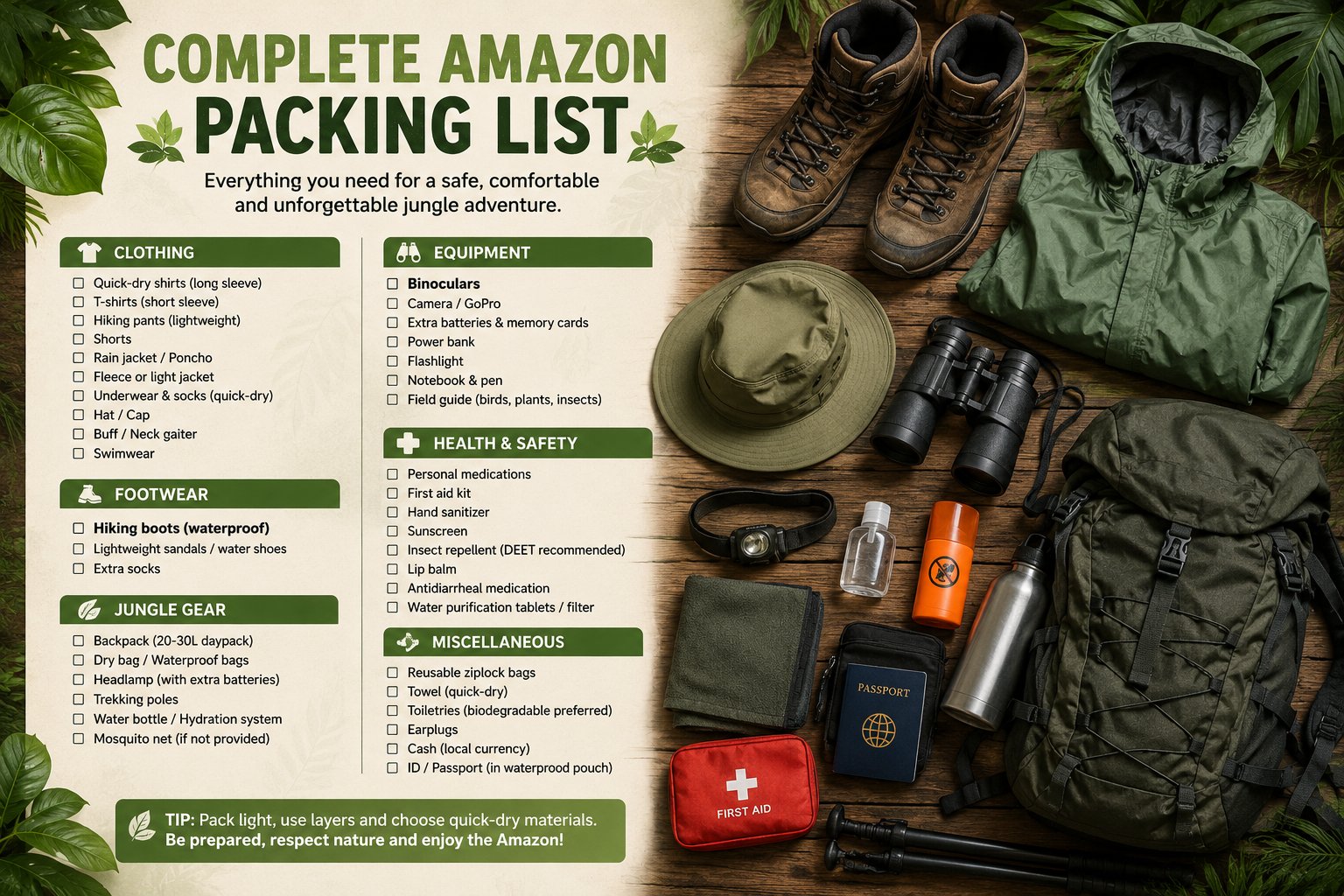
Don't worry—we've got you covered. After years of leading expeditions in Manu National Park, we've compiled the ultimate Amazon packing list based on real experience. This guide covers everything you need to bring (and what you can leave behind) for your Manu tour.
By the end of this article, you'll know exactly what to pack for your Amazon adventure, whether you're joining our 3-day Cultural Zone tour or our 7-day Reserved Zone expedition.
Quick Packing Checklist: The Essentials
Before we dive into the details, here's a quick overview of what you absolutely need:
| Category | Essential Items | Quantity |
|---|---|---|
| Clothing | Lightweight long pants, long-sleeve shirts, quick-dry t-shirts | 3-4 of each |
| Footwear | Hiking boots, sandals/crocs for lodge | 1 pair each |
| Rain Protection | Rain jacket, rain pants, waterproof bag | 1 of each |
| Sun & Insect Protection | Sunscreen, insect repellent, hat, sunglasses | 1 of each |
| Gear | Headlamp, binoculars, water bottle, daypack | 1 of each |
| Documents | Passport, vaccination certificate, insurance | Originals + copies |
Clothing: Dress for Success in the Jungle
What to Wear (and Why)
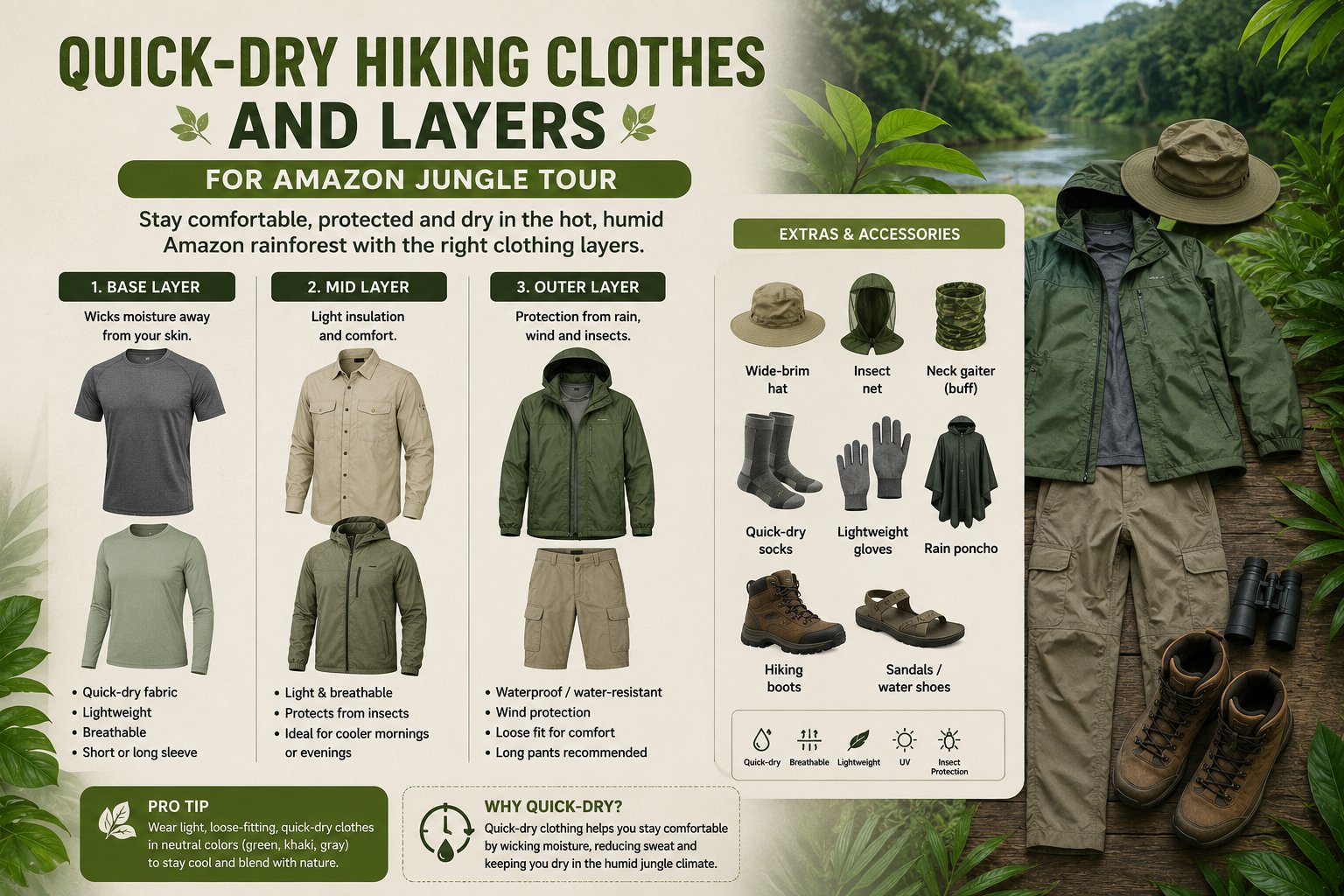
The key to Amazon clothing is layers and protection. You'll experience three different climate zones in a single day:
- High Andes (3,500m): Cold mornings (5-10°C / 40-50°F)
- Cloud Forest (2,000m): Cool and misty (15-20°C / 60-70°F)
- Lowland Amazon (400m): Hot and humid (25-35°C / 77-95°F)
Essential Clothing Items
Long Pants (3-4 pairs):
- Lightweight, quick-dry hiking pants
- Convertible pants (zip-off legs) are perfect
- Avoid jeans (they take forever to dry)
- Neutral colors (khaki, olive, brown) are best for wildlife viewing
Long-Sleeve Shirts (3-4):
- Lightweight, breathable fabric
- Protects from sun and insects
- Quick-dry material is essential
- Light colors attract fewer insects
T-Shirts (3-4):
- Quick-dry synthetic or merino wool
- Avoid cotton (stays wet and cold)
- For wearing at the lodge or when it's hot
Underwear and Socks (5-7 pairs each):
- Quick-dry underwear
- Merino wool or synthetic hiking socks
- Bring extras (everything stays humid in the jungle)
Warm Layer (1-2):
- Fleece jacket or lightweight down jacket
- For cold mornings in the Andes and cloud forest
- Also useful for night walks in the jungle
Swimsuit (1):
- For swimming in oxbow lakes or rivers
- Some lodges have pools or hot tubs
What NOT to Wear
- Jeans: Too heavy, take forever to dry
- Shorts: Expose legs to insects, thorns, and sun
- Bright colors: Can scare wildlife away
- Camouflage: Illegal in some countries (not Peru, but best to avoid)
- Cotton everything: Stays wet and uncomfortable
Footwear: Your Most Important Gear
Hiking Boots or Trail Shoes
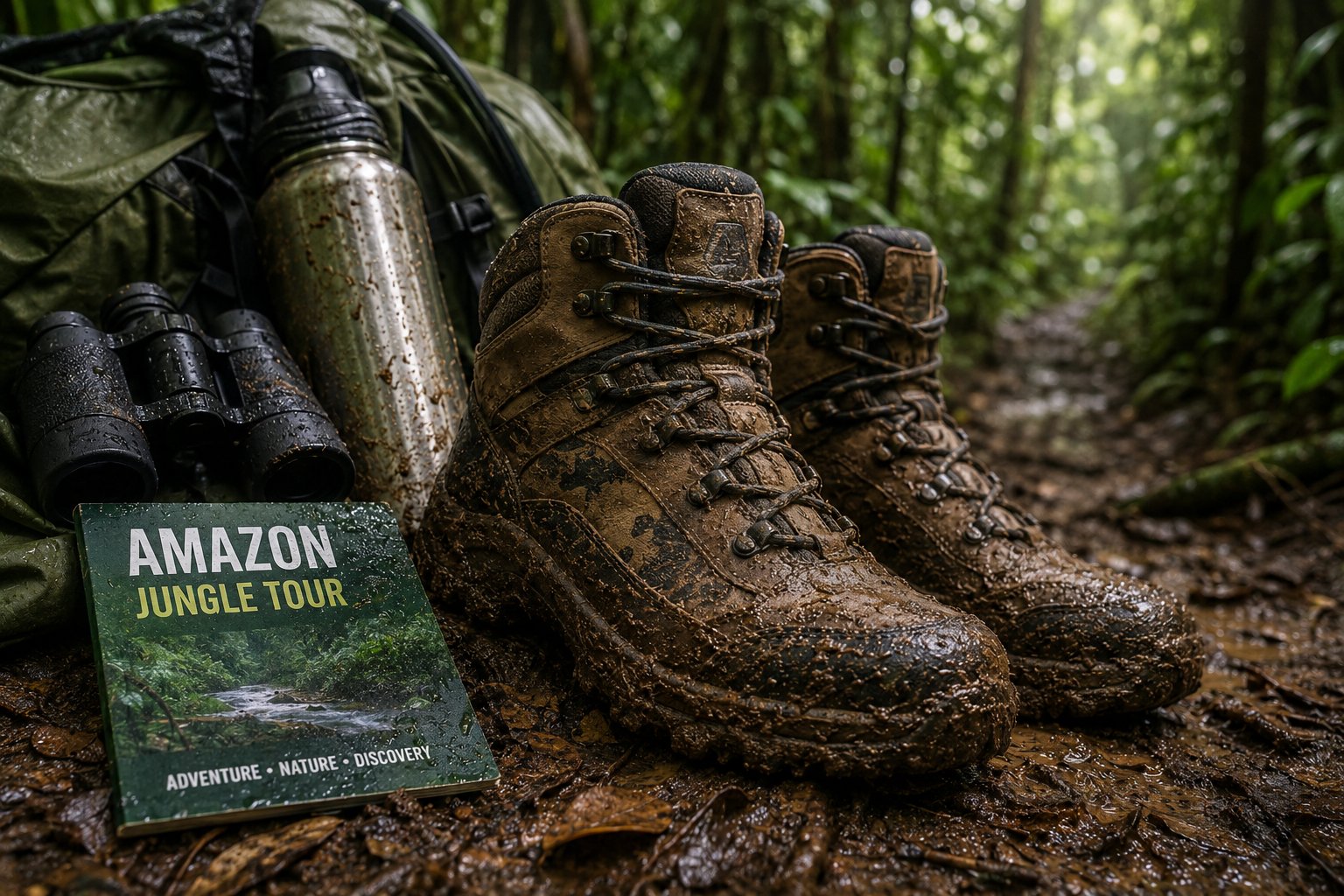
What to bring:
- Waterproof hiking boots with good ankle support, OR
- Lightweight trail running shoes if you prefer
- Must have good grip (trails can be muddy and slippery)
- Break them in before your trip (no new boots!)
Why it matters: You'll be hiking 2-4 hours daily on uneven, often muddy trails. Good footwear prevents blisters and ankle injuries.
Sandals or Crocs
What to bring:
- Comfortable sandals or Crocs for the lodge
- Waterproof is a plus
- For wearing around camp, at dinner, or on the boat
Why it matters: Your boots will get muddy and wet. You'll want something comfortable and easy to clean for the lodge.
Rubber Boots (Optional)
Some tours provide rubber boots (wellies) for muddy conditions. Check with your tour operator. If not provided, you can rent them in Cusco for about $5-10.
Rain Protection: Expect to Get Wet
It rains in the Amazon. A lot. Even in the dry season (May-October), afternoon showers are common. Here's how to stay dry:
Essential Rain Gear
Rain Jacket (1):
- Waterproof and breathable (Gore-Tex or similar)
- Lightweight and packable
- With a hood
- Ponchos work but are less practical for hiking
Rain Pants (1):
- Lightweight waterproof overpants
- Essential for hiking in rain
- Can double as wind protection
Waterproof Bag or Dry Bag (1-2):
- For protecting electronics, documents, and dry clothes
- 10-20 liter size is perfect
- Or use heavy-duty garbage bags (cheap and effective)
What to Keep Dry
- Camera and electronics
- Passport and documents
- Extra dry clothes for the lodge
- Sleeping clothes
Sun and Insect Protection: Stay Safe and Comfortable
Sun Protection
Sunscreen:
- SPF 30-50, water-resistant
- Reef-safe formula (biodegradable is best)
- Bring enough for the entire trip (jungle shops are limited)
Hat:
- Wide-brimmed hat for sun protection
- With a chin strap (it can get windy on the boat)
- Lightweight and breathable
Sunglasses:
- Polarized lenses reduce glare on the water
- With a strap to keep them secure
Insect Protection
Insect Repellent:
- DEET-based (20-30% concentration) is most effective
- Or picaridin-based (less harsh on skin)
- Bring enough for the entire trip
- Apply every 4-6 hours, especially at dawn and dusk
Permethrin-Treated Clothing (Optional but Recommended):
- Treat your clothes with permethrin before the trip
- Kills insects on contact
- Lasts through several washes
- Available at outdoor gear stores
Head Net (Optional):
- Useful if you're very sensitive to insect bites
- Lightweight and packable
- Most people don't need it
Gear and Equipment: Essential Items
Headlamp or Flashlight

- Essential for night walks and moving around the lodge at night
- Headlamp is better than flashlight (keeps hands free)
- Bring extra batteries
- Red light mode is best for wildlife (doesn't scare animals)
Binoculars
- 8x42 or 10x42 are ideal for jungle birding
- Waterproof and fog-proof
- With a neck strap
- Rental available in Cusco if you don't have your own
Water Bottle
- Reusable water bottle (1-2 liters)
- Insulated bottles keep water cool
- Most tours provide drinking water, but having your own bottle is convenient
Daypack
- Small backpack (20-30 liters) for daily activities
- Waterproof or with a rain cover
- For carrying water, camera, rain gear, and snacks during hikes
Camera and Electronics
- Camera with zoom lens (for wildlife photography)
- Extra memory cards and batteries
- Waterproof bag or case
- Phone and charger (limited electricity at lodges)
- Power bank for charging on the go
Optional but Useful Items
- Walking sticks or trekking poles: Helpful for muddy trails and river crossings
- Small towel: Quick-dry microfiber towel
- Ziplock bags: For keeping things dry and organized
- Multi-tool or knife: Useful but not essential
- Earplugs and eye mask: For sleeping (jungle can be noisy and bright)
Documents and Money: Don't Forget These!
Essential Documents
- Passport: Original + photocopy
- Yellow Fever Vaccination Certificate: Required for Reserved Zone, recommended for Cultural Zone
- Travel Insurance: Proof of coverage (medical and evacuation)
- Tour confirmation: Printout or digital copy
- Emergency contact information
Money
- Cash (Peruvian Soles): For tips, souvenirs, and extras
- Credit card: For emergencies (not accepted at lodges)
- Tips: Budget $10-20 per day for guides and staff
Important: There are no ATMs in the jungle. Bring enough cash for the entire trip.
Health and Safety: Be Prepared
First Aid Kit
Most tours provide a comprehensive first aid kit, but you may want to bring:
- Personal medications (bring enough for the entire trip + extra days)
- Prescription drugs in original containers
- Altitude sickness medication (if needed)
- Antihistamines for insect bites
- Anti-diarrhea medication
- Pain relievers (ibuprofen, acetaminophen)
- Band-aids and blister treatment
Health Considerations
- Malaria: Not a risk in Manu (too high altitude)
- Dengue: Low risk, but use insect repellent
- Yellow Fever: Vaccination required for Reserved Zone
- Altitude sickness: Not a concern (you're descending, not ascending)
Seasonal Packing Adjustments
Dry Season (May - October)
- Less rain, but still bring rain gear
- Trails are less muddy
- Wildlife more active near water sources
- Peak tourist season (book in advance)
Wet Season (November - April)
- More rain (bring extra rain gear)
- Trails can be very muddy (rubber boots recommended)
- Lush, green landscapes
- Fewer tourists
- Some areas may be harder to access
What's Included in Your Tour
When you book with Manu Wild, here's what's typically provided:
Standard Inclusions
- ✓ All meals during the tour
- ✓ Drinking water
- ✓ Accommodation at jungle lodges
- ✓ Professional bilingual guide
- ✓ All transportation (land and boat)
- ✓ Park entrance fees
- ✓ First aid kit and emergency equipment
- ✓ Rubber boots (on most tours)
- ✓ Rain ponchos (upon request)
What's NOT Included
- ✗ Flights to/from Cusco
- ✗ Hotels in Cusco (before/after tour)
- ✗ Travel insurance
- ✗ Tips for guides and staff
- ✗ Personal expenses and souvenirs
- ✗ Alcoholic beverages
Packing Tips from Our Guides
Less is More
It's tempting to overpack, but remember: you'll be carrying your luggage on boats and through lodges. Pack light and only bring what you truly need.
Use a Backpack or Duffel Bag
Hard-shell suitcases are difficult to handle on boats and in lodges. A backpack or soft duffel bag is much more practical.
Pack in Ziplock Bags
Organize your clothes and gear in ziplock bags or packing cubes. This keeps things dry and makes it easy to find what you need.
Leave Valuables in Cusco
Don't bring expensive jewelry or unnecessary electronics. Most hotels in Cusco will store your extra luggage for free while you're in the jungle.
Label Your Luggage
Put your name and contact information on your luggage. This helps if bags get mixed up during transport.
Downloadable Packing Checklist
Want a printable version of this packing list? Download our free PDF checklist →
This checklist includes everything mentioned in this article, organized by category, so you can check off items as you pack.
Frequently Asked Questions (FAQ)
Can I buy forgotten items in the jungle?
Very limited options. There are small shops in Pilcopata (on the way to Manu) that sell basic items like insect repellent and sunscreen, but selection is limited and prices are high. Bring everything you need from Cusco.
Do I need to bring my own sleeping bag?
No, all lodges provide bedding (sheets, blankets, pillows). If you're camping on a special expedition, we provide sleeping bags. You can bring a sleeping bag liner if you prefer.
Is there electricity at the lodges?
Most lodges have electricity for a few hours in the evening (usually 6-10 PM) using generators or solar power. Bring a power bank to charge your devices during the day. Some premium lodges have 24-hour electricity.
Can I do laundry at the lodges?
Most lodges offer laundry service for an extra fee ($5-10 per load). However, the humidity means clothes take a long time to dry. It's better to bring enough clothes for the entire trip.
What if I have dietary restrictions?
Inform us in advance when you book. Our cooks can accommodate vegetarian, vegan, gluten-free, and most other dietary needs. However, options are limited in the jungle, so don't expect gourmet variety.
Do I need special vaccinations?
Yellow fever vaccination is required for the Reserved Zone and recommended for the Cultural Zone. Other vaccinations (hepatitis A & B, typhoid, tetanus) are recommended but not required. Consult your doctor 4-6 weeks before your trip.
Can I charge my camera and phone?
Yes, but electricity is limited. Most lodges have power outlets in common areas for a few hours in the evening. Bring a power bank for charging during the day. Some premium lodges have power in the rooms.
What about toilet paper and soap?
Lodges provide basic toiletries (soap, toilet paper), but it's a good idea to bring your own preferred brands. Biodegradable soap is best for the environment.
Ready to Pack for Your Amazon Adventure?
Now that you know exactly what to bring for your Manu tour, you're ready for an unforgettable Amazon adventure! Remember, the key is to pack light, stay dry, and protect yourself from sun and insects.
If you have any questions about packing or need advice specific to your tour, don't hesitate to reach out. We're here to help you prepare for the trip of a lifetime.
Explore Our Manu National Park Tours →
Have questions about packing or need help choosing the right tour? Contact our team → and we'll help you plan the perfect Amazon adventure.