
If you're planning a trip to the Peruvian Amazon, you've probably noticed a massive range in prices. A quick search for "Manu National Park tours" can show you options ranging from $200 to over $1,500 per person.

It’s completely normal to wonder: Why is there such a huge difference? And how much should you really expect to spend?
At Manu Wild, we believe in total transparency. In this complete cost breakdown, we’ll explain exactly how much a Manu National Park tour costs, what is (and isn’t) included in that price, and how to spot the "hidden fees" of budget operators so you can choose the best value for your adventure.
Quick Overview: Manu Tour Price Ranges
Before we dive into the details, here is a realistic breakdown of what you can expect to pay for a Manu tour, depending on the duration and depth of the expedition:
| Tour Type & Duration | Estimated Price Range (per person) | Best For |
|---|---|---|
| Budget / Short (3-4 Days) Cultural Zone only |
$350 - $500 USD | Travelers with limited time or tighter budgets seeking a jungle introduction. |
| Mid-Range / Standard (4-5 Days) Cultural Zone or basic Reserved Zone |
$500 - $800 USD | Most travelers. Offers a great balance of wildlife sightings, comfort, and value. |
| Premium / Expedition (6-8 Days) Deep Reserved Zone, specialized birding/photography |
$800 - $1,500+ USD | Serious wildlife enthusiasts, photographers, and those seeking an untouched wilderness experience. |
What is Actually Included in Your Manu Tour Price?
When you book a reputable tour (like ours at Manu Wild), the price is largely all-inclusive once you arrive in Cusco. Here is what your investment covers:
- Transportation: Private tourist vehicle from Cusco, all boat navigation, and return transport to your Cusco hotel.
- Accommodation: All nights in jungle eco-lodges or campsites (with bedding, mosquito nets, and basic amenities).
- Meals: All breakfasts, lunches, dinners, and snacks during the expedition.
- Drinking Water: Unlimited purified or boiled drinking water (crucial in the jungle).
- Expert Guides: Professional, bilingual, local guides trained in wildlife tracking and wilderness first aid.
- Permits and Fees: All entrance fees to Manu National Park and, if applicable, the expensive and limited Reserved Zone permits.
- Equipment: Life jackets for boat trips, and often rubber boots or rain ponchos upon request.
What is NOT Included? (Budget for These Extras)
To avoid surprises, make sure you budget for these common exclusions:
- Flights to/from Cusco: You must arrange your own travel to the starting point.
- Pre/Post-Tour Accommodation: Hotels in Cusco or Lima before or after your jungle trip.
- Travel Insurance: Mandatory for your safety (must cover medical evacuation).
- Tips: It is customary to tip your guide, driver, and lodge staff. Budget around $10-$20 USD per day, depending on group size and service quality.
- Personal Expenses: Souvenirs, alcoholic beverages, or snacks at roadside stops.
- Optional Upgrades: For example, the internal flight from Cusco to Boca Colorado (usually $150-$200 extra) to skip the long road journey.
Why Do Prices Vary So Much? (The Real Cost of Quality)
If you see a 4-day tour for $250 and another for $600, they are not the same product. Here is where the extra money goes in a high-quality tour:
1. Group Size
Cheap tours pack 12-16 people into a single van and a large boat. Premium operators keep groups small (4-8 people), ensuring a personalized experience, better wildlife viewing, and less environmental impact.
2. Guide Expertise
A certified, experienced naturalist guide commands a higher salary, but they are the ones who will actually find the wildlife, explain the ecosystem, and keep you safe. Budget tours often use inexperienced guides.
3. Lodge Quality and Sustainability
Reputable eco-lodges invest in proper waste management, solar power, fair wages for local staff, and comfortable beds with private bathrooms. Budget camps may cut corners on hygiene and safety.
4. Permit Costs
Entering the Manu Reserved Zone requires special government permits with strict daily quotas. Authorized operators pay these fees and invest in the logistics required to access these remote areas legally and safely.
Hidden Costs to Watch Out For with "Budget" Operators
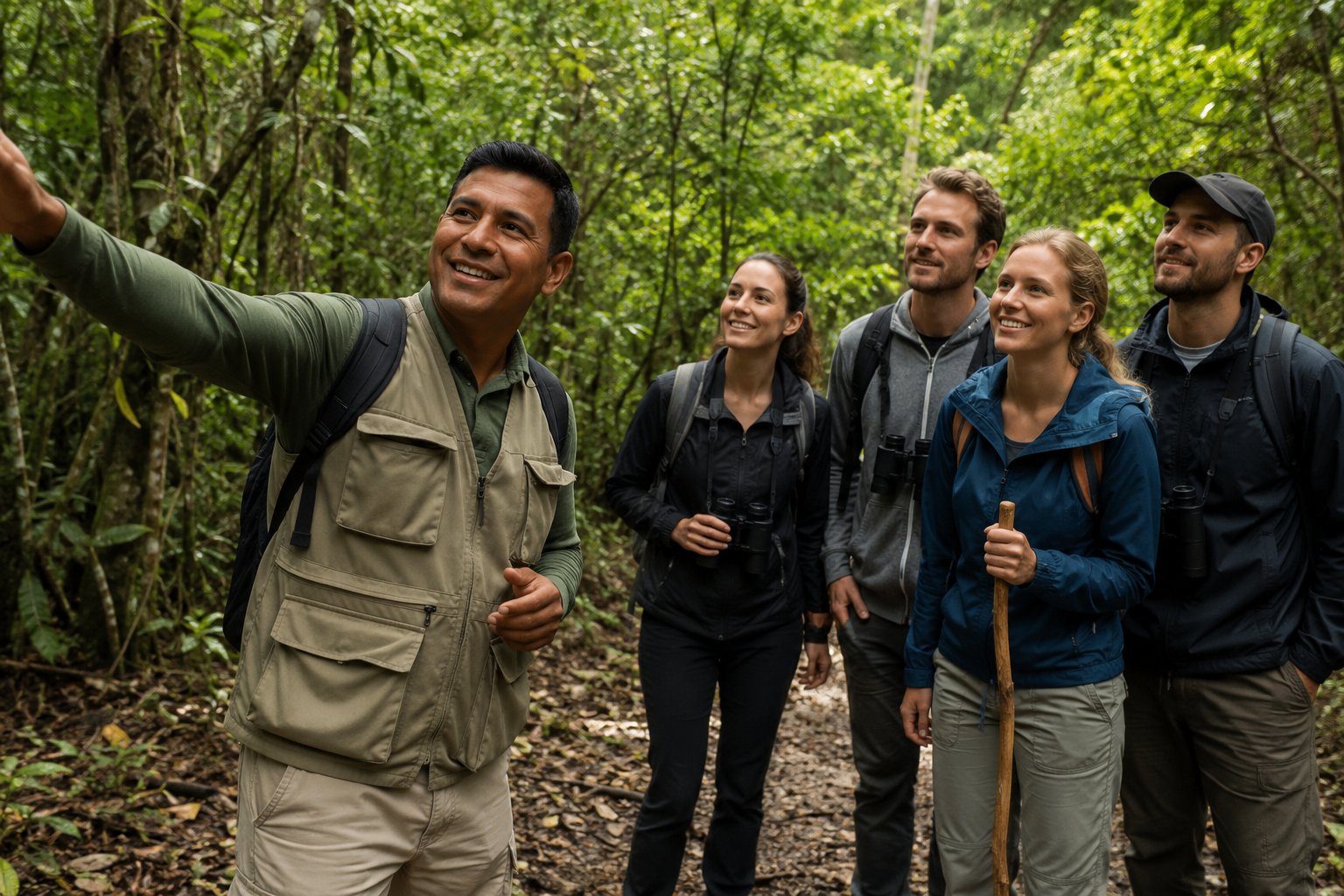
Be wary of prices that seem too good to be true. Some operators advertise a low base price but nickel-and-dime you along the way. Watch out for:
- "Optional" activities that are actually essential: Charging extra for the boat ride or the clay lick visit.
- Poor food quality: You may end up buying your own snacks or meals because the provided food is insufficient.
- Equipment rentals: Being forced to rent rubber boots or rain ponchos at inflated prices on the road.
- Overcrowded transport: Uncomfortable, unsafe vehicles that break down, causing you to miss parts of the tour.
How to Get the Best Value for Your Manu Tour
- Book Direct: Booking directly with a local operator (like Manu Wild) cuts out the middleman agency fees, often giving you a better price and more flexible communication.
- Travel in the Shoulder Season: May or November often offer slightly lower rates and fewer crowds, while still providing excellent wildlife sightings.
- Join a Small Group: Private tours are amazing but costly. Joining a scheduled small-group departure is the most cost-effective way to experience a premium tour.
- Ask the Right Questions: Before booking, ask: "What is the maximum group size?", "Are all park fees included?", and "What is the guide-to-guest ratio?"
Frequently Asked Questions (FAQ)
Can I negotiate the price of a Manu tour?
Reputable operators have fixed prices to ensure fair wages for staff, maintain safety standards, and support conservation. However, many operators offer early-bird discounts, last-minute deals (though risky for the Reserved Zone), or discounts for children or large private groups. It never hurts to ask our team about current promotions.
Do I have to pay in USD or Peruvian Soles?
Most tour operators, including Manu Wild, quote prices in USD for international stability, but we gladly accept payment in Peruvian Soles (PEN) at the current exchange rate. Credit card payments are usually accepted, though a small processing fee (3-5%) may apply.
Is there a single supplement fee for solo travelers?
Yes, many operators charge a "single supplement" if you want a private room at the lodge, as lodge pricing is based on double occupancy. However, if you are willing to share a room with another traveler of the same gender, this fee is often waived. Ask your operator about their solo traveler policy.
How much cash should I bring for the jungle?
There are no ATMs in Manu National Park. We recommend bringing $50-$100 USD (or the equivalent in Soles) in small bills for tips, souvenirs at roadside stops, and any personal snacks or drinks you might want at the lodge.
Are children charged the same price?
Many operators offer discounted rates for children (usually under 12 years old) since they consume fewer resources and may not require a full-price park permit. Always check the specific child policy of your chosen tour.
Ready to Invest in an Unforgettable Amazon Experience?
Understanding the Manu National Park cost is about more than just finding the cheapest option; it’s about investing in a safe, sustainable, and truly transformative experience. When you choose a reputable operator, you are supporting local communities, protecting the rainforest, and guaranteeing your own safety and comfort.
At Manu Wild, we pride ourselves on offering transparent pricing and exceptional value. No hidden fees, no compromises on safety or quality.
View Our Transparent Tour Prices & Itineraries →
Have questions about our pricing or need help finding a tour that fits your budget? Contact our friendly team → and we’ll help you plan the perfect, affordable Amazon adventure.