
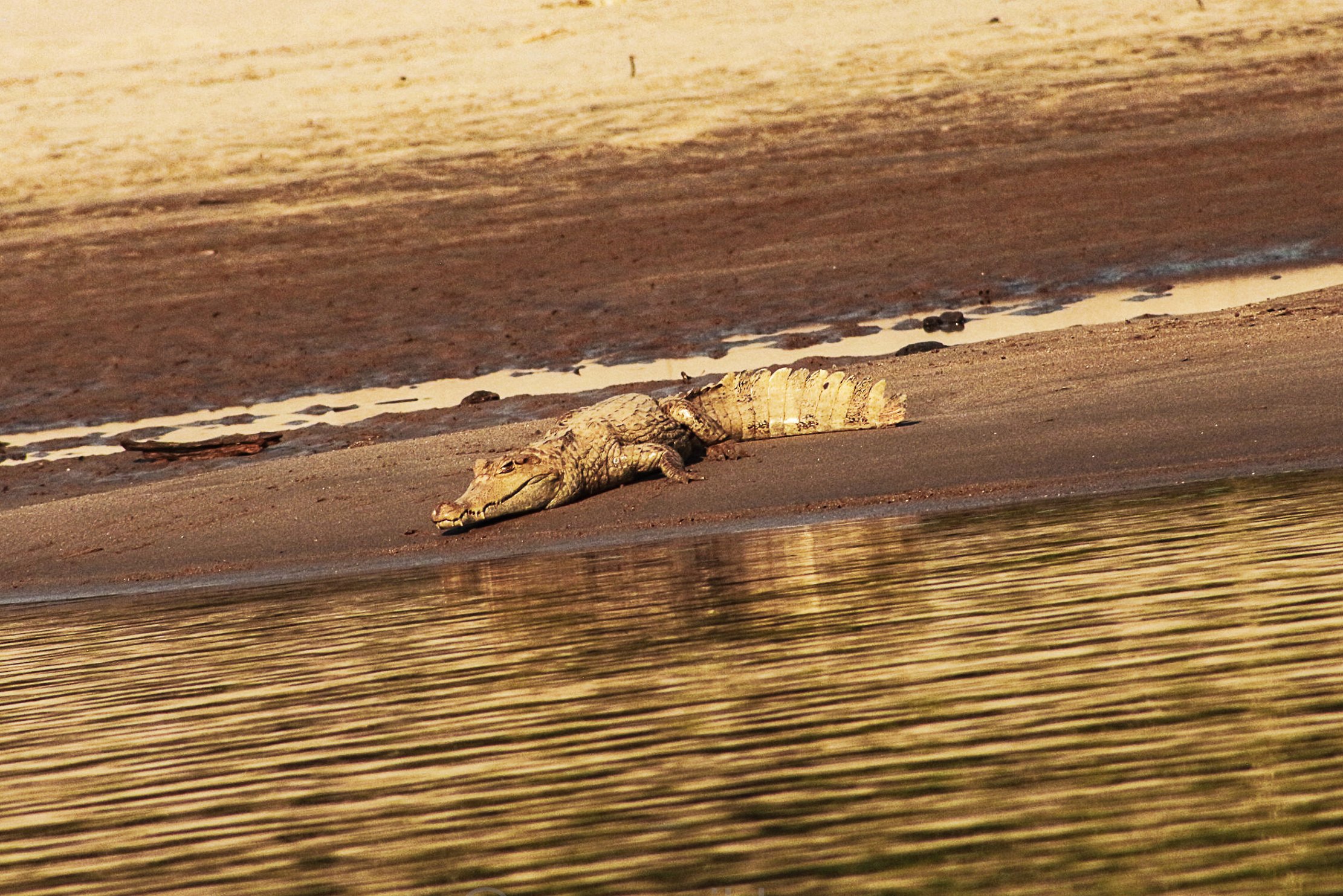
With over 1,000 recorded bird species in a single protected area, Manu National Park is not just a great place to go birding—it is widely considered the greatest birding destination on the planet. To put that number in perspective, that is more bird species than the entire United States and Canada combined.
As you leave the high, dry plains of the Andes and begin your descent toward the Amazon basin, you enter a mystical, mist-shrouded realm known as the cloud forest. This unique ecosystem, draped in mosses, orchids, and bromeliads, is one of the most biodiverse habitats on Earth.
For birders, the cloud forest section of the legendary Manu Road is nothing short of a pilgrimage. It is here that you will find two of the most spectacular, sought-after, and culturally significant birds in the Americas: the vibrant Andean Cock-of-the-Rock and the mythical Resplendent Quetzal.
In this specialized guide, we will show you exactly where, when, and how to spot these cloud forest jewels during your birding expedition in Manu National Park.
The Magic of the Manu Cloud Forest
The cloud forest in Manu typically sits between 1,500 and 3,000 meters (5,000 to 10,000 feet) in elevation. The constant moisture from the Amazon basin rising and hitting the Andes creates a perpetual mist. This humidity supports an explosion of plant life, which in turn provides endless food sources and nesting sites for hundreds of specialized bird species.
Birding here requires patience, warm clothing, and a good ear, but the reward is witnessing some of the most colorful and bizarre avian behaviors on the planet.
The Andean Cock-of-the-Rock: Peru's National Bird
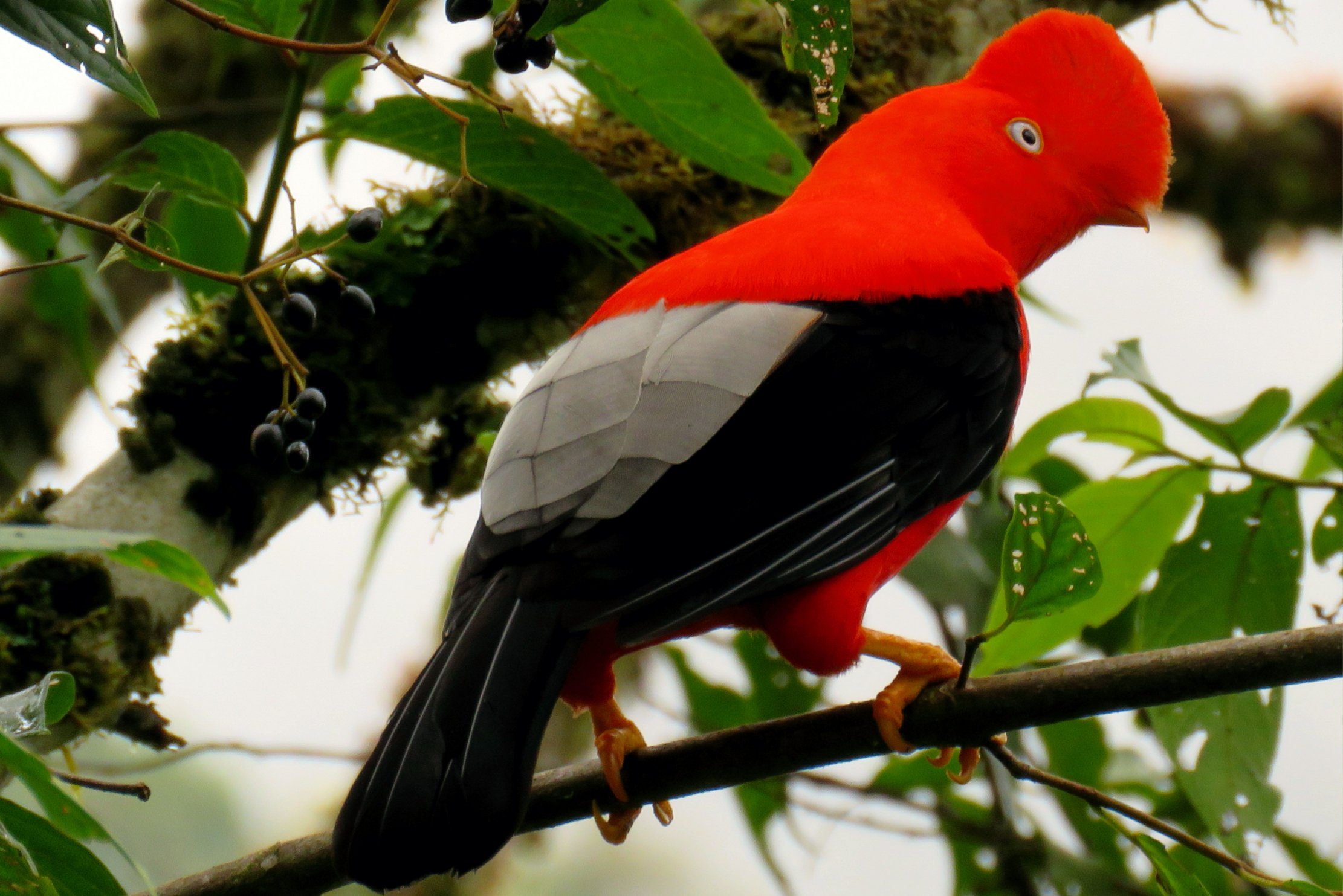
If there is one bird that defines the Andean cloud forest, it is the Andean Cock-of-the-Rock (Rupicola peruvianus). Males are impossible to miss: they are a brilliant, fiery orange-red with a massive, disk-like crest that covers half their beak. Females, conversely, are a dark, camouflaged brownish-red.
Where and How to See Them
Cock-of-the-Rocks are famous for their leks—communal mating grounds where males gather at dawn and dusk to perform elaborate, noisy dances to impress females.
- The Best Spots: Along the Manu Road, there are several well-known lek sites, particularly around the Abra Acjanaco and the cloud forest lodges. Our expert guides know the exact locations of active leks.
- The Best Time: You must be at the lek site before dawn (around 5:30 AM) or in the late afternoon (around 4:30 PM). The males will jump, flap their wings, and emit loud, grating calls.
- Photography Tip: The light in the deep forest can be tricky. Use a fast lens (f/2.8 or f/4) and be prepared to raise your ISO. A tripod or beanbag is essential for sharp images in low light.
The Resplendent Quetzal: The Sacred Bird of the Andes
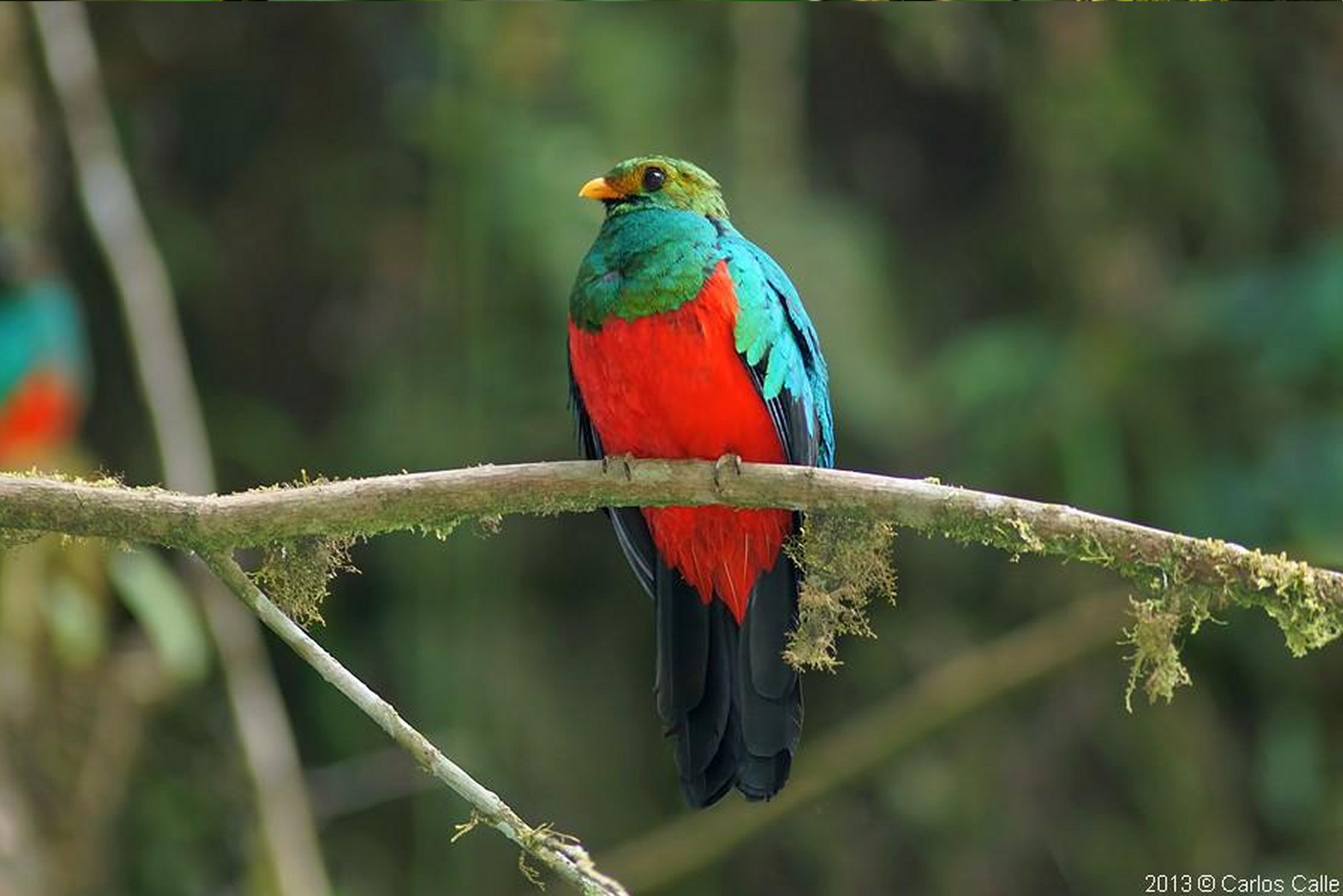
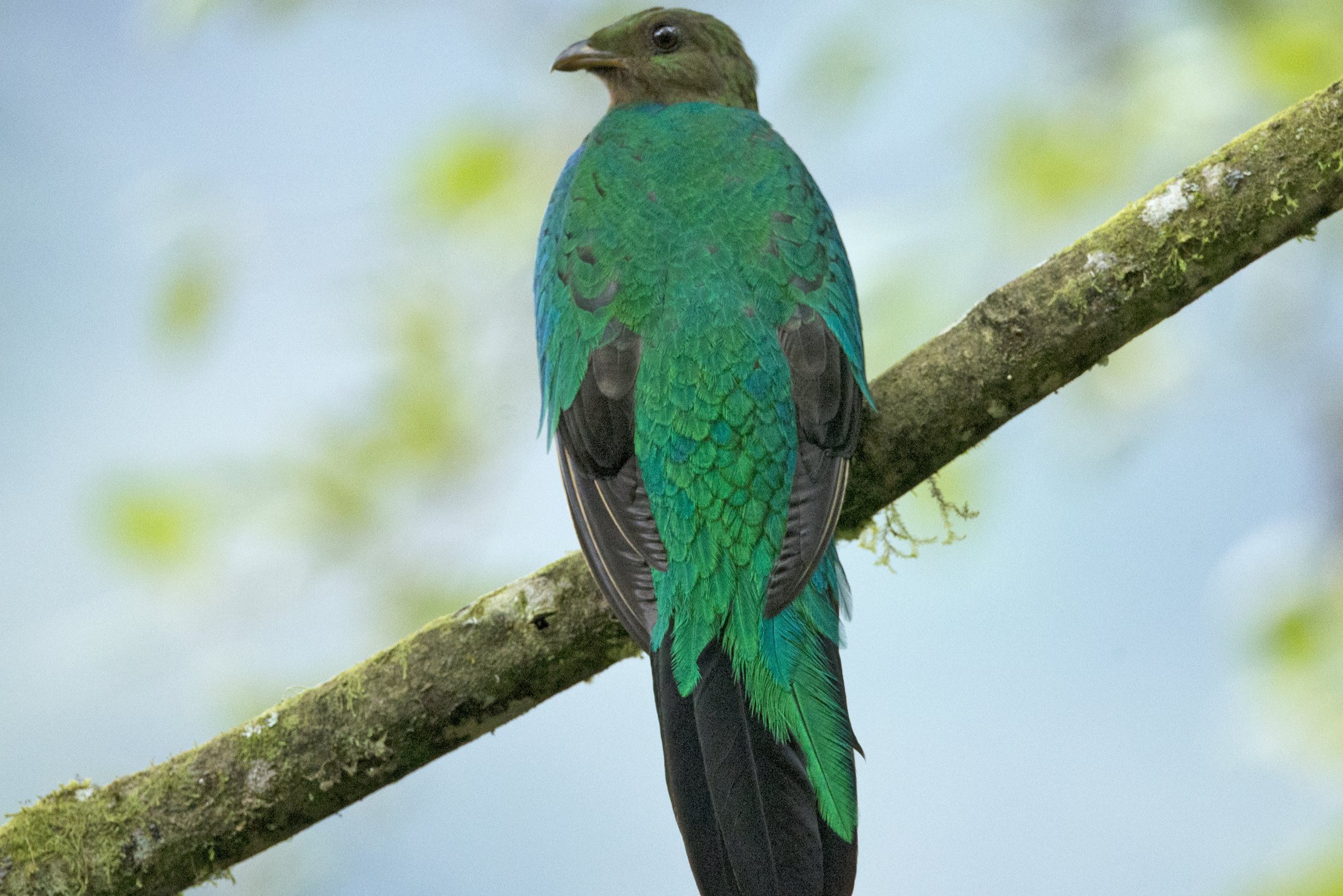
Revered by the ancient Incas and Mayans, the Resplendent Quetzal (Pharomachrus mocinno) is a symbol of freedom and beauty. The males are stunning, with iridescent green plumage, a bright red belly, and, during breeding season, incredibly long, flowing tail coverts that can reach up to 3 feet (1 meter) in length.
Where and How to See Them
Unlike the noisy Cock-of-the-Rock, the Quetzal is famously quiet and elusive. They feed almost exclusively on wild avocados (aguacatillos) found in the cloud forest.
- The Best Spots: They are most commonly spotted in the upper sections of the Manu Road, particularly in areas with abundant fruiting trees. Our guides constantly scan the canopy for the distinct silhouette of their long tails.
- The Best Time: Early morning is best, as they are most active when foraging for fruit. They often perch on dead, exposed branches to digest their food, offering a brief but spectacular window for observation.
- Photography Tip: Quetzals often sit high in the canopy. A telephoto lens of at least 400mm is highly recommended. Look for the contrast of their red belly against the green moss.
Other Cloud Forest Stars to Look Out For
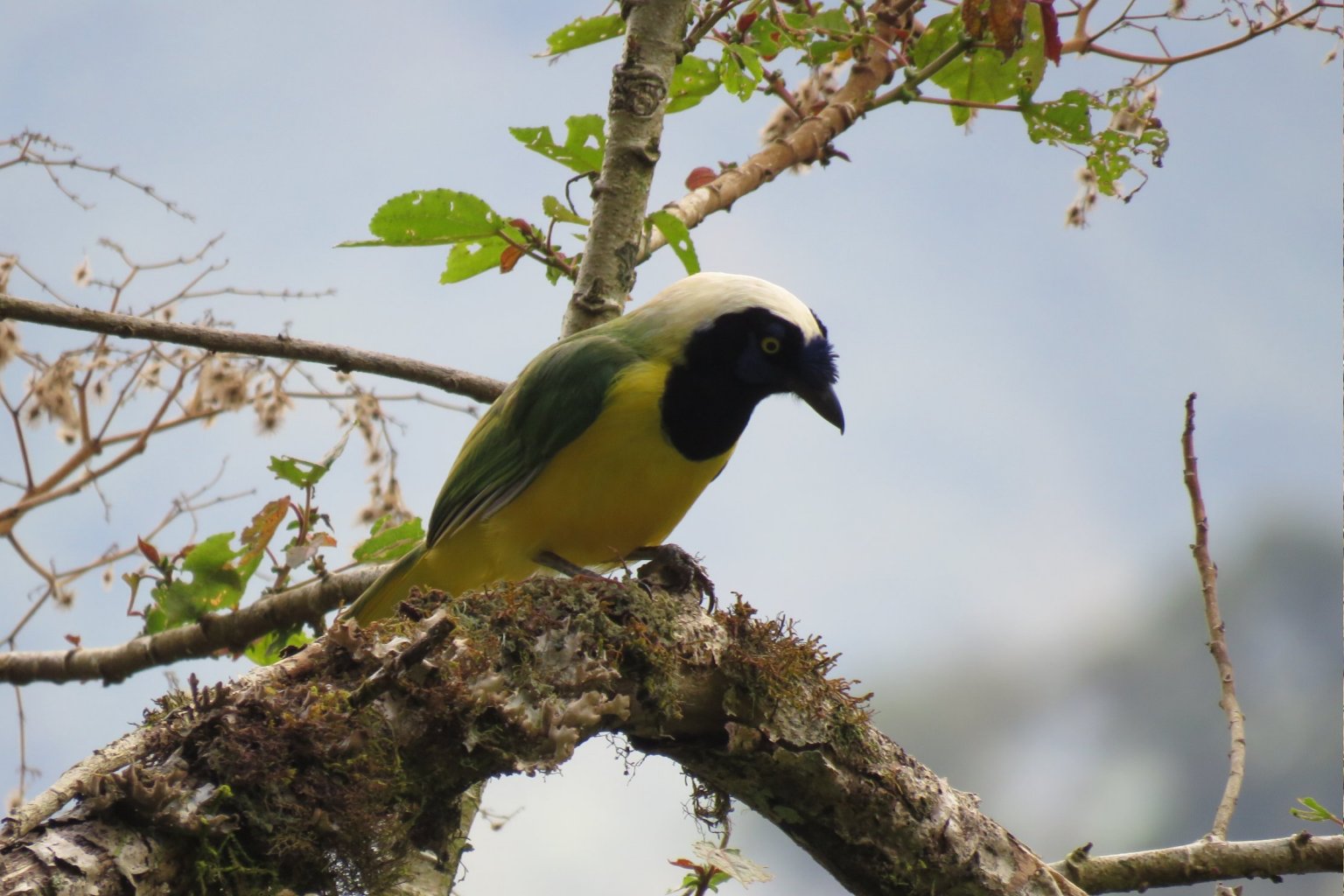
While the Cock-of-the-Rock and Quetzal are the headliners, the Manu cloud forest is packed with other endemic and spectacular species. Keep your binoculars ready for:
- Sword-billed Hummingbird: The only bird in the world with a bill longer than its body, perfectly adapted to drink from long tubular flowers.
- Andean Motmot: Recognizable by its racket-shaped tail feathers and striking blue and black facial mask.
- Barred Fruiteater: A beautifully patterned bird with a bright yellow belly and green back, often seen hopping quietly through the understory.
- Toucan Barbet: A colorful, vocal bird that looks like a mix between a toucan and a woodpecker.
Essential Tips for Cloud Forest Birding
Other Cloud Forest Stars to Look Out For
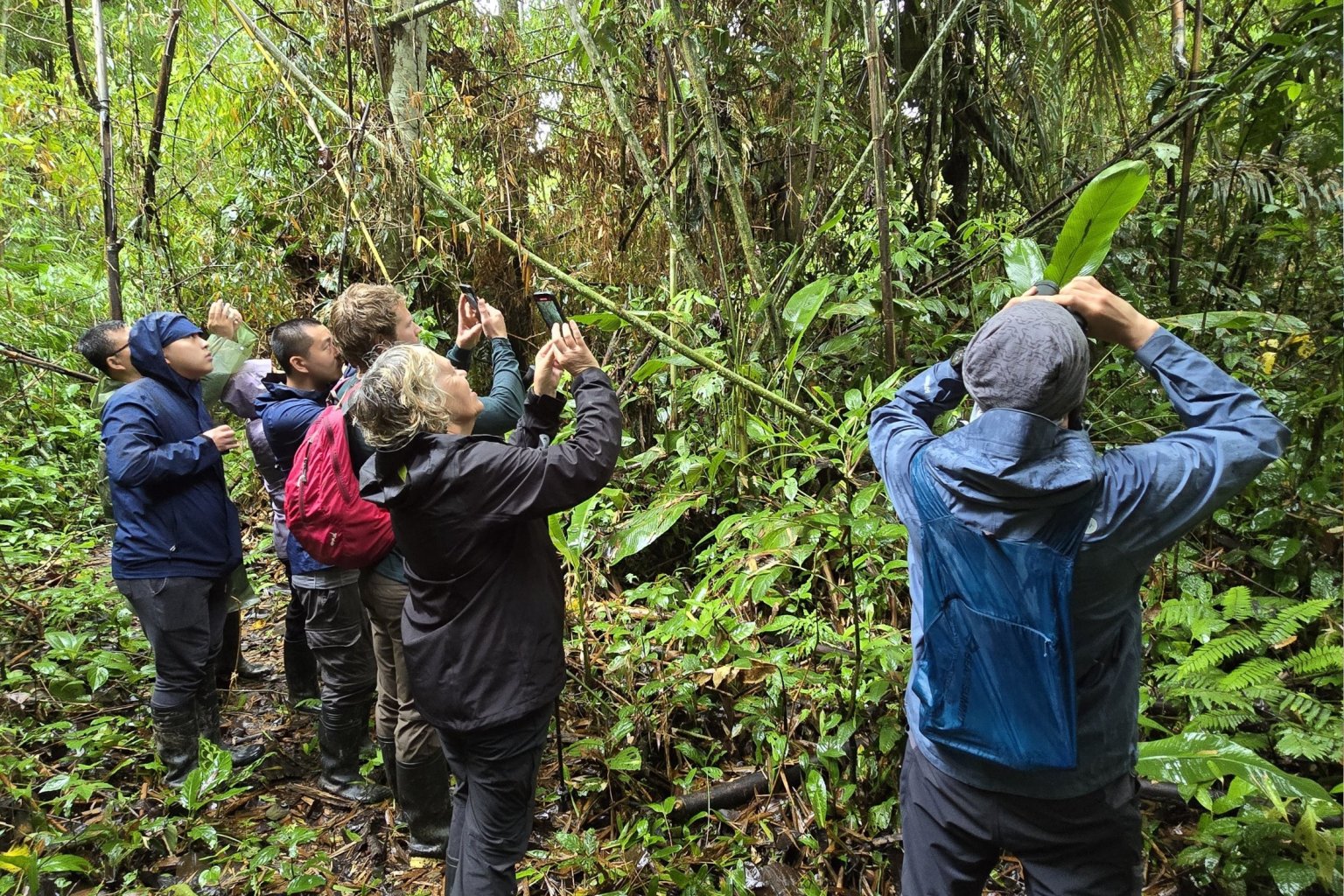
Birding in the cloud forest is very different from birding in the lowland Amazon. Here is how to prepare:
- Dress in Warm Layers: It can be surprisingly cold (10°C to 15°C / 50°F to 59°F) and damp in the early morning. Bring a fleece, a windbreaker, and a warm hat.
- Bring Rain Gear: As the name implies, it rains frequently. A good quality rain jacket and a cover for your binoculars/camera are mandatory.
- Move Slowly and Quietly: The birds here are easily startled. Speak in whispers and avoid sudden movements.
- Listen to the Calls: In the dense mist, you will often hear a bird before you see it. Our guides are experts at mimicking bird calls to bring them closer for a better view (always done ethically and sparingly).
Best Time of Year for Cloud Forest Birding
You can bird the Manu cloud forest year-round, but the dry season (May to October) is generally preferred. The trails are less muddy, and the fruiting cycles of the wild avocados (which attract the Quetzals) are highly predictable during these months. However, the wet season (November to April) brings lush, vibrant growth and can offer spectacular sightings of hummingbirds and tanagers.
Frequently Asked Questions (FAQ)
Do I need a specialized guide to see the Cock-of-the-Rock and Quetzal?
Highly recommended. While you might stumble upon a Cock-of-the-Rock lek by chance, finding a Quetzal in the dense canopy without an expert guide who knows the specific fruiting trees and call patterns is incredibly difficult. A local guide increases your chances exponentially.
Is the hiking difficult in the cloud forest?
The birding trails in the cloud forest are generally moderate. They can be steep, muddy, and slippery, especially in the wet season. Good hiking boots with ankle support and trekking poles are highly recommended.
Can I use playback (recorded bird calls) to attract these birds?
The use of playback should be strictly limited and only done by professional guides. Overuse of playback can stress the birds, disrupt their mating rituals (especially for the Cock-of-the-Rock), and cause them to abandon their territory. We adhere to strict ethical birding practices.
What is the difference between the Resplendent Quetzal and the Golden-headed Quetzal?
Both are found in the Manu region! The Resplendent Quetzal is found at higher elevations (above 1,500m) and has a red belly. The Golden-headed Quetzal is found at slightly lower elevations (foothills) and, as the name suggests, has a golden-yellow head. Our 5 and 6-day tours cover both elevations, giving you a chance to see both!
Ready to Conquer the Cloud Forest?
Spotting a Resplendent Quetzal perched on a mossy branch, or watching the fiery dance of the Cock-of-the-Rock at dawn, are moments that redefine your connection with nature. The cloud forest of Manu is a living, breathing masterpiece, and we know exactly how to show it to you.
Whether you are a dedicated twitcher looking to complete your life list or a nature lover seeking the magic of the Andes, our specialized itineraries are designed for you.
Explore Our Manu Birding Tours →
Have specific target species you want to add to your list? Contact our birding experts → and let's tailor the perfect cloud forest expedition for you.